Local businesses don’t usually have the luxury of disappearing into the background.
They’re the brick-and-mortars that have people walking past their storefronts, cars are driving past the signs, and always customers are comparing the experience, the price, and more.
Competition is hard for small businesses. Not only is the competition against place down the street or in the next town, but bigger businesses way beyond. Every aspect of social media presence carries more weight, too, as any neighbors would comment if they saw a fun post one day, then saw a booth at a local sporting event, farmers market, or other community gathering place.
The benefit of the level of scrutiny that small business owners get is much more personal brand awareness.
What is branding for your local business?
It is more than your logo, your slogan, or the colors on your website. It is the repeated feeling people get when they notice your business in real life. Do they remember you? Do they recognize you? Do they understand what you offer without having to think too hard?
That last part matters. A lot.
Branding doesn’t have to be expensive. Also, you don’t need a massive advertising budget. Looking established, trustworthy, and memorable? It’s easier than you think.
1. Create a Consistent Visual Identity
Before spending money on ads, flyers, signs, or promotional items, make sure your business looks like the same business everywhere.
A storefront might use one version of the logo. The Facebook page might use another. The printed menu, business card, or banner might look like it came from a completely separate company.
Customers may not consciously notice every mismatch.
But they feel it.
Start with the basics: one clean logo, two or three brand colors, and one or two fonts. Use them across your signage, website, social media pages, packaging, uniforms, and printed materials.
You do not need a complicated brand guide. Even a one-page reference sheet can keep everything clear.
That small bit of consistency helps your business feel familiar faster, which is exactly what you want in a local market.
2. Upgrade Your Vehicle Into a Mobile Advertisement
A parked car still gets seen.
That sounds almost too simple, but think about it. Your vehicle sits outside homes, job sites, schools, stores, lunch spots, gas stations, and random parking lots all week.
People notice things there.
Maybe not deeply. Maybe not with some dramatic “I must call this business immediately” reaction. But the name lands somewhere in the back of their mind, especially if they see it more than once.
That’s worth noting.
A full vehicle wrap can be expensive, and honestly, not every small business needs one right away. You can start with something smaller and still get real visibility.
Window lettering. Door decals. Magnets. A bumper sticker. A partial graphic that gives people the basics without covering every inch of the car.
Even custom sports car decals can make a personal or company vehicle look more intentional, especially if you want branding that feels clean instead of loud.
Keep the redesign readable. Please.
Your business name should be easy to catch. Same with your logo, phone number, website, and maybe one short line about what you do.
That is probably enough.
Nobody is reading a paragraph on the side of a truck while turning left across traffic. They are glancing, sipping coffee, trying not to miss the light. Give them something they can actually remember.
3. Improve Storefront Signage
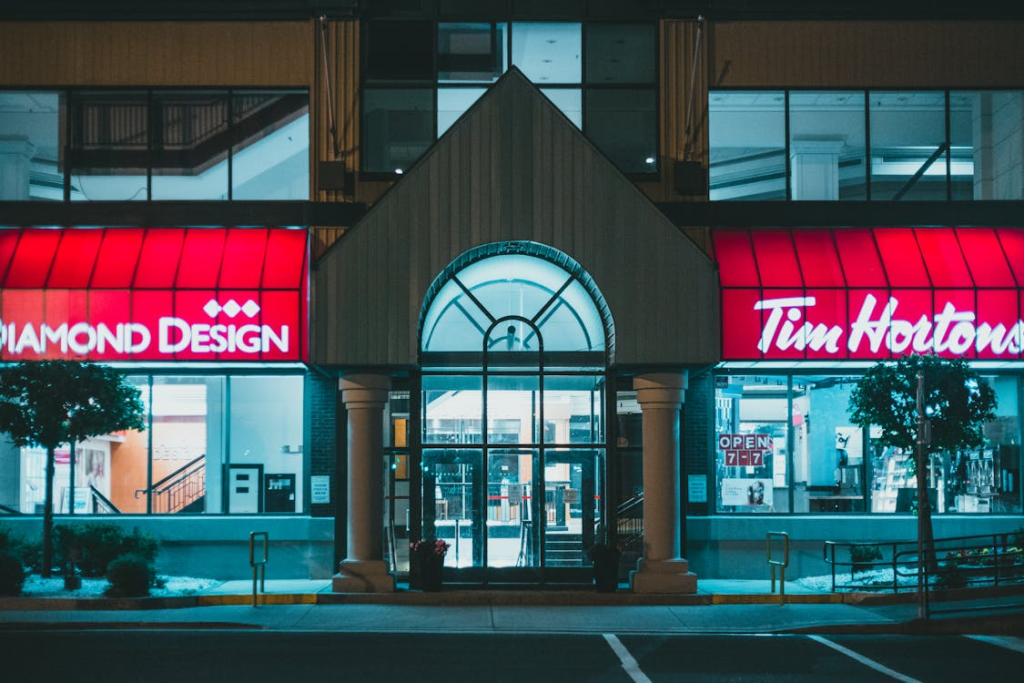
Your sign is doing work all day.
Even when you are closed. Even when nobody is standing outside greeting people. It is still there, catching eyes from the sidewalk, the parking lot, and the cars rolling past.
So make it clear.
Business name. Hours. Main service. Maybe one simple offer in the window.
That is usually enough.
If the sign is faded, cluttered, or hard to read, people may keep moving. Not because they hate your business. They just do not want to solve a puzzle from across the street.

4. Build a Strong Presence on Social Media
People check.
Before they visit, call, order, or book, many customers will look you up online. They want to see signs of life.
Recent photos help. So do reviews, short updates, behind-the-scenes posts, quick videos, and the occasional customer shoutout.
You do not need to post every hour.
A few steady posts each week can make the business feel active and real. Show the team. Show the work. Show the new product on the shelf or the booth you set up at Saturday’s event.
Tiny proof.
That’s what social media gives people before they decide to trust you.
5. Participate in Local Events
There is something different about meeting a business in person.
You shake a hand. Ask a question. Grab a flyer. Maybe take a sample or a piece of candy while your kids pull you toward the bounce house.
Now the name means something.
You don’t need the biggest booth or the most expensive sponsorship package. Start small. A school fundraiser. A chamber mixer. A youth sports tournament. Anywhere your customers are already spending time.
Bring the basics.
A banner. Branded shirts. Flyers. Samples. Anything useful people might actually keep instead of tossing in the nearest trash can.
And give them a reason to stop.
A giveaway. A quick demo. A bowl of candy or a pile of fun stickers (by the way, these are always the undefeated winners).
Weeks later, when they need what you offer, your business will feel familiar. Sometimes, that little spark of recognition is all it takes.
Building Recognition One Small Step at a Time
Branding doesn’t have to be complicated.
It’s not one big moment. It’s more like a series of small impressions that stack up over time until people feel like they already know your business.
Then, one day, they need exactly what you offer.
And instead of searching from scratch, they think of you first.