Introduction
In Tala, Caloocan City, a region rich in clay deposits, the Tala Foundation Inc. has established the Cardinal Ceramics Plant. This initiative serves as both an economic and environmental project, providing local employment while utilizing the abundant clay resources in the area. The project aligns with sustainable development by transforming natural resources into valuable construction materials, specifically clay bricks.
Expert-Backed Clay Brick Manufacturing Process
The production of clay bricks follows a meticulous process designed by industry experts, ensuring durability and quality. This process is based on research and recommendations from the Ceramics Research Division of the Industrial Technology Development Institute (ITDI) under the Department of Science and Technology (DOST).
Materials and Equipment Needed
Materials:
- Clay
- Sand
- Water
Equipment:
- Spades, hoes, and picks
- 14-mesh screen
- Wooden scraper
- 10″ x 5″ x 2½” wooden mold
- Gas kiln
Step-by-Step Guide to Making Clay Bricks
1. Clay Extraction
Raw clay is mined using spades, hoes, and picks. This ensures the raw material is collected efficiently while preserving the surrounding environment.
2. Purification of Clay
The extracted clay is passed through a 14-mesh screen to remove stones and impurities, ensuring a refined base material for high-quality bricks.
3. Mixing the Ingredients
Water and sand are added to the clay in specific proportions:
- 25% water
- 10% sand (by weight)
This mixture improves the plasticity and workability of the clay.
4. Molding the Bricks
- The prepared mold is placed on a drying platform.
- The clay mixture is poured into the 10″ x 5″ x 2½” wooden mold and manually wedged.
- Excess clay is scraped off to ensure uniformity.
5. Drying Process
- The “green bricks” (newly molded bricks) are dried at room temperature for 3 to 4 weeks.
- Regular turning of the bricks prevents warping and cracking.
6. Firing the Bricks
- The gas kiln is preheated for 2 hours at 98°C (208°F).
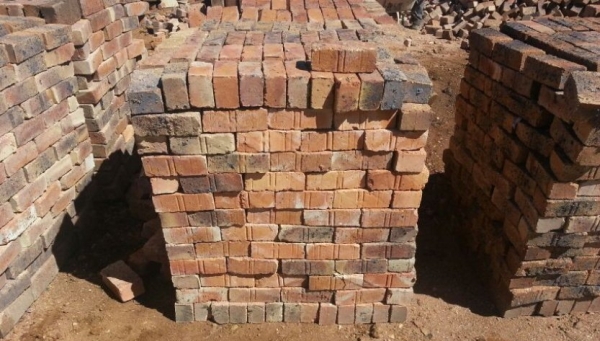
- The dried bricks are stacked in a “tie-tricks” formation for even heat distribution.
- Firing is conducted for 16 hours, ensuring durability and strength.
7. Cooling and Finalization
- The bricks are allowed to cool completely before use.
- Proper cooling prevents thermal shock, which can cause cracks or weaken the bricks.
Sustainable Impact of Clay Brick Production
The Cardinal Ceramics Plant is a model of sustainable economic development, providing long-term employment opportunities while utilizing natural resources responsibly. By following expert-backed procedures, the plant ensures high-quality brick production, supporting both local construction and community livelihood.
Conclusion
With the support of research institutions such as DOST-ITDI, the clay brick industry in Tala continues to grow, offering a balance of environmental sustainability and economic empowerment. The Cardinal Ceramics Plant stands as a testament to the potential of locally-driven industrial projects in fostering progress.
Would you like to explore more eco-friendly building materials? Share your thoughts in the comments!