
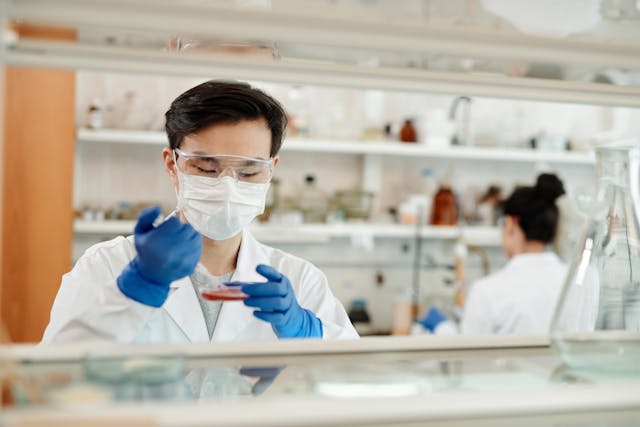
The convergence of artificial intelligence and biomanufacturing represents one of those rare moments in history where technology doesn’t just improve existing processes, it completely transforms them. Pharmaceutical companies and biotech firms racing to develop life-saving therapies now rely heavily on sophisticated AI systems to optimize production, ensure quality, and get treatments to patients faster. This isn’t just incremental progress; it’s a fundamental shift in how biological products are conceived, manufactured, and delivered worldwide. Machine learning algorithms, predictive analytics, and automated systems have woven themselves into the fabric of biomanufacturing operations, creating opportunities for efficiency and precision that seemed impossible just a decade ago.
The Digital Transformation of Biomanufacturing
Walk into a biomanufacturing facility today, and you’ll find it bears little resemblance to operations from even ten years ago. Traditional facilities operated with manual processes and legacy systems that functioned like isolated islands, disconnected and unable to communicate effectively. AI technologies have fundamentally altered this landscape by enabling real-time data collection, analysis, and decision-making across entire production chains. Smart sensors embedded throughout manufacturing equipment generate massive volumes of data about temperature, pressure, pH levels, cell growth rates, and countless other critical parameters.
Predictive Analytics and Quality Assurance
Quality control in biomanufacturing isn’t just important, it’s absolutely critical, since even minor deviations can compromise product safety and efficacy. AI-powered predictive analytics have shifted the entire paradigm from reactive to proactive quality management. Instead of simply detecting problems after they’ve already impacted production, manufacturers can now anticipate potential quality issues before they occur. Machine learning models trained on historical manufacturing data identify subtle correlations between process parameters and final product quality, essentially providing early warning signals when conditions start drifting outside acceptable ranges.
Process Optimization Through Machine Learning
The sheer complexity of biological manufacturing processes presents optimization challenges that can seem overwhelming, thousands of variables potentially affecting outcomes in ways that aren’t always obvious. Traditional approaches relied heavily on trial-and-error experimentation combined with the accumulated wisdom of experienced operators who’d seen it all. AI and machine learning have revolutionized this aspect by enabling sophisticated modeling and simulation of production processes that would be impossible to test manually. Neural networks analyze relationships between dozens of input variables and output characteristics, identifying optimal operating conditions that maximize yield while keeping costs and production time under control. What’s particularly impressive is that these systems continuously learn from each production run, refining their recommendations and adapting to subtle changes in raw materials, equipment performance, or environmental conditions. When integrating AI algorithms across manufacturing operations, organizations rely on a unified namespace to ensure information flows freely between different operational domains. This holistic approach to data management ensures that AI algorithms have access to the comprehensive, consistent information they need to make accurate predictions and actionable recommendations.
Accelerating Drug Development and Scale-Up
The journey from laboratory discovery to commercial-scale production has always been one of the most challenging aspects of bringing new biologics to the market. AI technologies are dramatically compressing the timelines required for this transition by enabling more efficient process development and scale-up activities that previously took years. Computational models powered by AI can simulate how biological processes will behave at different scales, helping engineers anticipate and address potential issues before investing millions in expensive pilot facilities or full-scale production equipment. These capabilities proved their worth during the COVID-19 pandemic, when vaccine manufacturers needed to achieve unprecedented production volumes faster than anyone thought possible.
Regulatory Compliance and Documentation
Biomanufacturing operates under some of the most stringent regulatory requirements imaginable, with exhaustive documentation and validation processes designed to ensure product safety and efficacy. AI systems are increasingly supporting compliance activities by automating data collection, analysis, and reporting functions that traditionally consumed enormous amounts of human effort and attention to detail. Natural language processing algorithms can review manufacturing records, batch reports, and quality documentation to identify inconsistencies or potential compliance issues that might escape a tired reviewer’s notice. These systems can also generate regulatory submission documents by synthesizing information from multiple sources, ensuring completeness and accuracy while dramatically reducing preparation time.
The Future Landscape of AI-Enabled Biomanufacturing
Looking ahead, the integration of AI into biomanufacturing will only deepen and expand as technologies mature and organizations gain more hands-on experience with implementation. Emerging developments in edge computing, 5G connectivity, and advanced robotics will enable even more sophisticated automation and decision-making capabilities right there on the production floor. Digital twins, virtual replicas of physical manufacturing facilities, will become standard tools for testing process changes, training operators, and troubleshooting problems without disrupting actual production or risking costly mistakes. The convergence of AI with other advanced technologies like synthetic biology and gene editing will unlock entirely new categories of biological products and manufacturing approaches that seem almost like science fiction today.
Conclusion
The intersection of artificial intelligence and biomanufacturing represents something far more profound than incremental improvement in existing processes. It’s a fundamental reimagining of how biological products are developed, produced, and delivered to the people who need them. As these technologies continue to mature and weave themselves more deeply into manufacturing operations, they promise to make life-saving treatments more accessible, affordable, and personalized than anyone could have imagined just a generation ago. The medical business has entered a new era where technological sophistication directly translates to better patient outcomes, and organizations that successfully navigate this transformation will shape the future of healthcare for generations to come.