
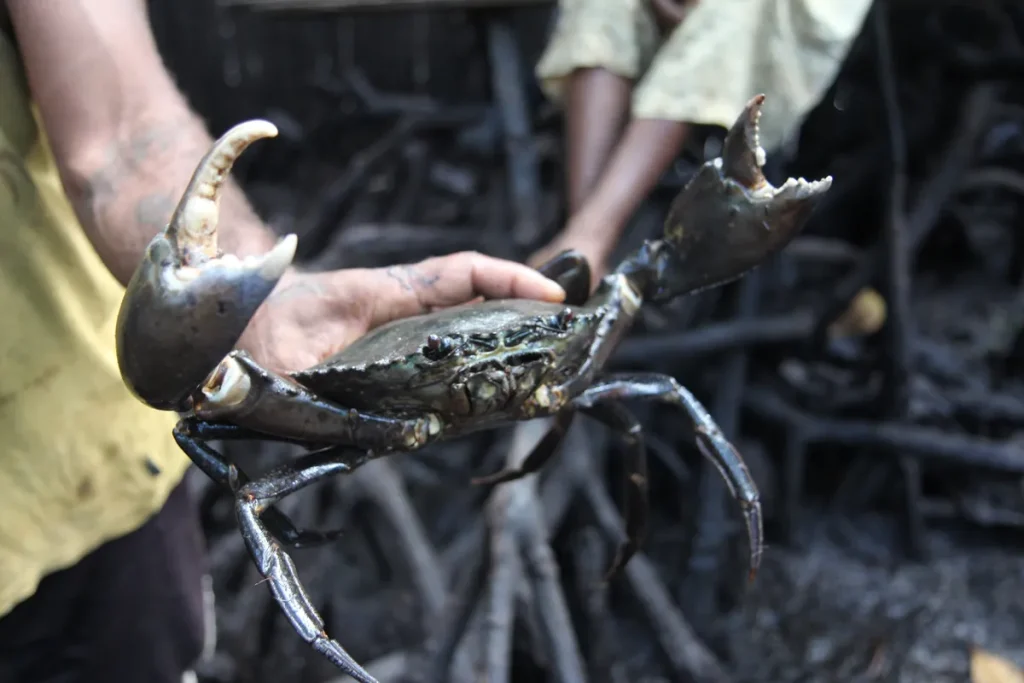
The mudcrab or alimango is one of the most valuable seafood delicacies in the Philippines. It is a profitable aquaculture venture due to its delicious taste and high market demand. Pregnant or gravid mudcrabs, rich in eggs and aligue (roe or crab fat), are especially sought after and exported to countries like Japan, China, Hong Kong, and Taiwan. In traditional Chinese medicine, mudcrabs are believed to have health-restoring and rejuvenating properties, especially beneficial for older adults and those recovering from illness.
Types of Mudcrabs
Not all mudcrab farmers are aware of the different species and their characteristics since they look almost identical at first glance. However, the most valuable and widely cultivated genus is Scylla, often called the “King of Crabs.”
There are four main types under this genus:
- Scylla serrata
- Scylla olivacea
- Scylla tranquebarica
- Scylla paramamosain
Among these, Scylla serrata is the most preferred species for farming. It grows fast, adapts easily to pond environments, and reaches marketable size quickly—some reaching 1 kilogram within six months. Regular feeding and proper pond management ensure healthy growth. Unlike other species, it rarely digs burrows, preventing damage to pond dikes.
Small mudcrabs or crab seeds are collected by local fishers from mangrove areas and sold to fishpond operators. Mudcrabs thrive best in brackish water—a mixture of fresh and saltwater.
Polyculture Possibility
Mudcrabs can be cultured alongside milkfish (bangus) since they occupy different feeding levels. However, they should not be raised with shrimp (sugpo), as crabs tend to prey on them during molting. For sustainability, it is important to have a consistent source of crab seeds near the farming site.
Mudcrab Culture and Fattening Methods
Want to learn the complete guide to mudcrab culture and fattening? Click the link to explore everything you need to know.
There are two common methods of growing and fattening mudcrabs in the Philippines:
A. First Method: Pond Culture
- Site Selection
Choose an area with brackish water salinity between 10–20 parts per thousand (ppt). - Soil Type
The soil should be muddy-sandy and not sticky to ensure proper pond construction. - Pond Preparation
Use bamboo screens or banig fences (around two meters high) to enclose the pond.
Drive the bamboo poles about two inches deep into the soil for stability.
Install fine mesh or bamboo barriers along the dike to prevent crabs from escaping. - Water Level
Maintain a pond depth of 50–70 centimeters and ensure good water exchange to keep it clean. - Stocking Density
Stock 2,000–5,000 crab seeds per hectare, each weighing 10–15 grams. - Feeding
- Young crabs feed naturally on algae and other pond organisms.
- For growing crabs, feed with small fish (trash fish) at 5–8% of the total crab weight per day.
- Weigh the crabs every 20 days to adjust feed amounts.
- Harvesting
Harvest after 90–120 days, depending on growth performance.
B. Second Method: Cage Culture
- Water Requirement
Use water with 10–20 ppt salinity. - Cage Construction
Build bamboo cages or pens measuring 1 foot high × 1 foot wide. - Stocking
Place one crab per cage, each weighing 150–200 grams. - Feeding
Feed twice daily (morning and afternoon) with 10–20 grams of trash fish. Increase the amount as needed. - Fattening Period
After 15 days, the carapace width should reach 12–15 cm, and each crab should weigh 250–300 grams, ready for harvest and sale.
Harvesting and Marketing
- Market Size
Mudcrabs are ready for market when one to two crabs weigh about one kilogram. - Harvesting Methods
Use traps (bintol), hooks (panukot), scissor nets (sakag), or gill nets (pante). - Handling and Storage
Crabs are usually sold alive. They can survive up to seven days out of water if kept in a cool, moist container and sprayed regularly with water. - Packaging
Tie the claws using dried nipa leaves near the belly to prevent injury and preserve freshness.
Conclusion
Mudcrab farming is a profitable and sustainable aquaculture enterprise in the Philippines. With proper management, site selection, and feeding practices, farmers can achieve high yields and quality crabs fit for both local and export markets.
Source:
Department of Agriculture – Bureau of Fisheries and Aquatic Resources (BFAR)