
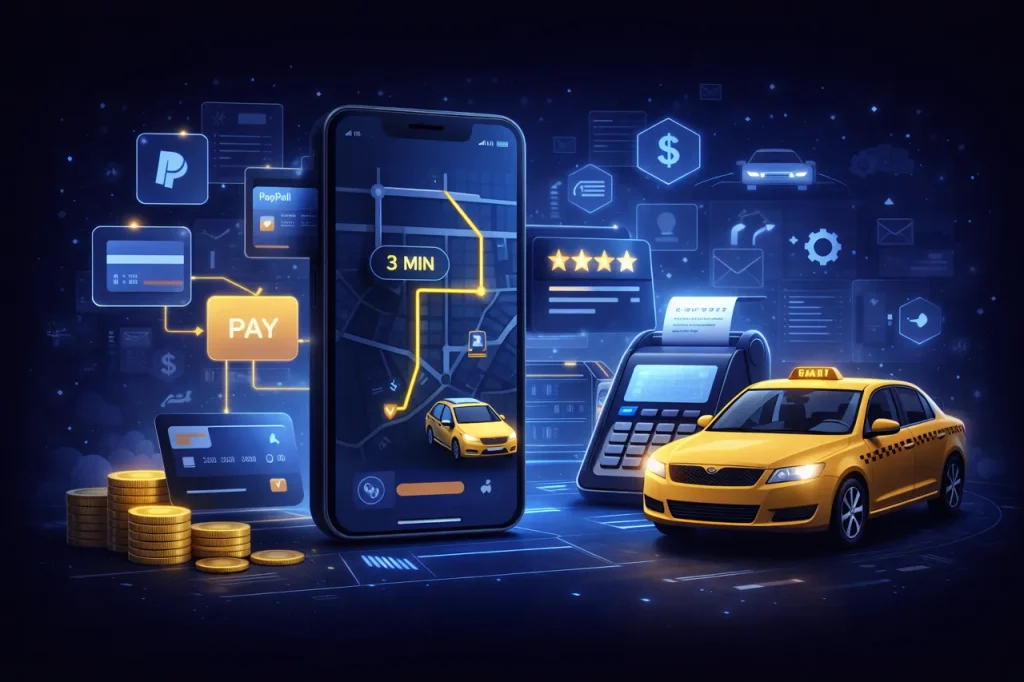
The taxi booking industry has evolved into its current state after undergoing rapid transformation throughout the last ten years. The initial ride-hailing platforms of the past developed into full mobility ecosystems which provide users with real-time tracking and dynamic pricing and driver ratings and digital payment options.
The payment gateway integration function stands as the most essential element which determines the success of a taxi booking application. The smooth ride experience becomes meaningless when users encounter checkout difficulties.
The current digital economy requires customers to have immediate access to safe payment methods which offer them multiple payment choices. The modern rider expects credit card and digital wallet and UPI and in-app balance payment options to provide them with easy payment solutions. The correct payment integration system provides businesses with multiple benefits which include increased revenue and customer confidence and improved customer retention.
The complete guide provides all necessary information about payment gateway integration for taxi booking applications.
Why Payment Gateway Integration Matters
The customer journey reaches its last stage through payment which serves as the most delicate part. Users will stop using the application when they experience payment system problems or difficulties with payment processing.
The payment gateway function provides secure financial transactions together with multiple payment methods and instantaneous fare estimation and verification and immediate receipt issuance with complete transaction records and automatic driver commission allocation.
Taxi booking applications which compete against Uber and Lyft must provide their users with smooth payment processes because this requirement has become vital for success.
Understanding How Payment Gateways Work
Before integration, it’s important to understand how a payment gateway functions within the taxi app ecosystem.
When a user confirms a ride and selects a payment method:
- The app encrypts payment information.
- The payment gateway securely transmits the data to the acquiring bank.
- The bank communicates with the card network (Visa, Mastercard, etc.).
- The issuing bank verifies the transaction.
- The approval or decline message is sent back in seconds.
The entire process occurs in real time, which creates an uninterrupted payment process.
Key Features Required in Taxi App Payment Systems
A Taxi Booking app development company payment module should include:
1. Multiple Payment Options
Users prefer flexibility. Your app should support:
- Credit and debit cards
- Digital wallets
- UPI or bank transfers
- In-app wallet balance
- Cash (optional fallback)
The more options available, the higher the conversion rate.
2. Real-Time Fare Calculation
Taxi apps use dynamic pricing models. Payment systems must:
- Accurately calculate base fare, distance charges, surge pricing
- Apply promo codes or discounts
- Show tax breakdown
- Display final fare before confirmation
Transparency prevents disputes and builds trust.
3. Secure Data Encryption
Security is paramount. Implement:
- SSL encryption
- PCI-DSS compliance
- Tokenization for card storage
- Two-factor authentication (2FA)
Data breaches in mobility apps can severely damage brand reputation.
4. Automated Driver Payout System
Taxi platforms operate on commission-based models. The system should:
- Deduct platform commission automatically
- Credit driver earnings instantly or on schedule
- Generate payout reports
- Handle refunds efficiently
Automating this reduces administrative workload and errors.
Steps to Integrate a Payment Gateway into a Taxi Booking App
Step 1: Choose the Right Payment Gateway Provider
Selecting a reliable provider is the foundation. Consider:
- Transaction fees
- Geographic coverage
- Supported currencies
- Integration APIs and SDKs
- Fraud detection capabilities
- Settlement cycle
The provider should align with your target market and business model.
Step 2: Ensure Regulatory Compliance
Taxi Booking app development company handle financial transactions and must comply with:
- Local banking regulations
- PCI-DSS standards
- Data protection laws
- KYC requirements
Work with legal and compliance teams to avoid penalties.
Step 3: Integrate SDKs and APIs
Most payment providers offer:
- Mobile SDKs for iOS and Android
- REST APIs for backend processing
- Webhooks for transaction updates
Your development team must integrate these into:
- User app
- Driver app
- Admin dashboard
Testing should include successful transactions, failed payments, refunds, and edge cases.
Step 4: Enable Tokenization for Faster Payments
Tokenization replaces sensitive card details with unique tokens. This allows:
- Faster repeat payments
- Reduced fraud risk
- Improved user convenience
Returning users can complete payments in seconds without re-entering details.
Step 5: Implement Fraud Detection Mechanisms
Taxi booking apps are prone to fraud risks like:
- Fake bookings
- Stolen card usage
- Chargebacks
- Promotional abuse
Advanced fraud detection tools use AI to flag suspicious patterns in real time.
Enhancing User Experience in Payment Flow
Payment integration should feel seamless—not intrusive.
Keep the Flow Simple
- Avoid multiple redirects
- Display clear confirmation screens
- Provide instant ride receipts
- Send push notifications after payment
Offer Split Payments
Some users prefer splitting fares with friends. Adding this feature enhances engagement.
Enable In-App Wallets
In-app wallets encourage repeat usage. Users can:
- Add funds in advance
- Earn cashback rewards
- Use referral bonuses
Wallet-based ecosystems also reduce transaction fees over time.
Handling Refunds and Disputes
Ride cancellations and fare disputes are common in taxi apps.
Your payment system should:
- Process partial or full refunds
- Handle cancellation fees
- Notify users instantly
- Update driver earnings automatically
A clear dispute resolution workflow improves customer trust.
International Payment Considerations
If your taxi app plans global expansion, consider:
- Multi-currency support
- Local payment methods
- Cross-border transaction fees
- Foreign exchange handling
Localization of payment options significantly improves adoption rates.
Performance and Scalability
Taxi booking apps experience peak demand during rush hours and events.
Your payment gateway must:
- Handle high transaction volumes
- Maintain low latency
- Prevent system downtime
- Support horizontal scaling
Downtime during peak hours can lead to revenue loss and user churn.
Cost Considerations
Payment gateway integration, Taxi booking app development cost typically includes:
- Setup fees
- Per-transaction charges
- Monthly maintenance fees
- Currency conversion charges
- Refund processing fees
Select a provider who offers both affordable services and dependable performance. Businesses that reduce their payment expenses face greater danger from fraud and experience operational difficulties.
Security Best Practices
The implementation of end-to-end encryption together with ongoing penetration testing and biometric authentication plus monitoring of suspicious activity and restricted third-party SDK access functions as the security system requirements.
Security system functions as a continuous process which requires ongoing dedication from security personnel.
Emerging Trends in Taxi App Payments
The development of payment technology continues through its current evolution. Taxi apps are adopting:
- Contactless NFC payments
- QR code-based transactions
- Crypto currency payments (in select markets)
- Voice-enabled payments
- AI-based fraud prevention
Your application remains competitive because you track current developments in the market.
Common Challenges in Integration
Some typical obstacles include:
- Integration complexity
- Delayed bank settlements
- Failed transaction handling
- User trust issues
- High transaction fees
Partnering with experienced developers and reliable providers reduces these risks.
The Business Impact of Seamless Payment Integration
An optimized payment gateway directly affects:
- Revenue generation
- User retention
- Brand reputation
- Operational efficiency
- Driver satisfaction
When payments work flawlessly, users are more likely to book again, and drivers are more confident about consistent earnings.
Convenience serves as the primary factor which determines customer loyalty in the highly competitive mobility market.
Conclusion
The process of integrating a payment gateway into a taxi booking application goes beyond its technical requirements because it serves as a vital element of their business strategy. The success of the application depends on payment integration because it establishes transaction security, meets regulatory requirements, and improves user experience while automating driver payouts. A successful deployment plan needs to establish its implementation path by which it will achieve its goals.
- The first step requires us to select an appropriate payment gateway which needs to be matched with our business needs.
- The second step requires us to verify that all regulations are followed.
- The third step requires us to establish protection methods which will safeguard our system.
- The fourth step requires us to create procedures which will guide our users through the system.
- The fifth step requires us to prepare our system for future expansion.
Taxi booking platforms need to establish powerful and adaptable and safe payment systems because digital payments have become the dominant method for conducting worldwide financial transactions. The entire process of riding requires payment systems because they need to operate without any interruptions. The operation of your payment systems creates a direct path that leads to speedier results which improve security and generate additional revenue for your business.