
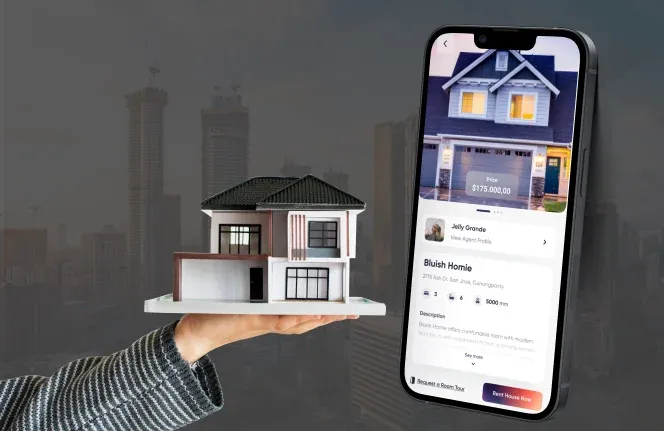
The real estate industry has undergone rapid changes because of digital transformation. Modern buyers and investors expect to access property listings instantly while they can view virtual tours and use smart filters and communicate through their smartphones. Property business owners must invest in real estate applications because they have become essential business tools.
Real Estate App Development Services enable agencies brokers and property firms to enhance their operational efficiency while they acquire qualified leads and deliver outstanding user experiences. The guide provides a comprehensive explanation of real estate app development through its step by step instructions and necessary launch platform requirements.
Why Your Property Business Needs a Real Estate App
Mobile devices remain the most popular method for conducting property searches on the internet. National Association of Realtors reports that many homebuyers use mobile devices to search for properties they want to buy. Buyers demand immediate access to property listings together with price information and site details and virtual property assessments.
A real estate application provides you with the following benefits
- A real estate application enables you to expand your market reach.
- The application delivers immediate property information to users.
- The system enhances your capability to acquire and monitor potential customers.
- The solution establishes trustworthiness for your business brand.
- The system enables users to access property listings at any time throughout the day.
A custom application enables brokers and property developers and aggregators and rental platform owners to strengthen their business operations.
Step 1: Define Your App’s Business Model
Your development process needs to begin with a complete definition of your application business model. The real estate application market includes multiple categories of applications which include:
- Property Listing Apps – Display properties for sale or rent.
- Aggregator Apps – Connect buyers, sellers, and agents.
- Rental Marketplace Apps – Focus on long-term or short-term rentals.
- Property Management Apps – Designed for landlords and property managers.
Global platforms display different operational models through their listing-based and aggregator systems which include Zillow and Magicbricks. You need to explain your revenue model because it requires detailed description.Your revenue model includes these possibilities.
- Commission per transaction
- Subscription plans for agents
- Featured property listings
- In-app advertisements
- Premium memberships
Step 2: Conduct Market Research
The development of successful real estate applications depends on thorough market research. Study:
- Competitor apps and their features
- Target audience behavior
- Property demand in specific regions
- Pricing trends
- Legal regulations
The study tracks users who start with property searching and finish with inquiry submission. The study expects to find problems in current applications which will be solved through development of an enhanced user experience solution.
Step 3: Finalize Core Features
Feature planning is the backbone of real estate app development. The following list contains essential features which your application must include:
User Panel Features
- The system lets users create accounts and manage their personal information.
- Users can search properties through multiple advanced search options which include specific filters.
- The system provides map-based search capabilities which allow users to find locations through map integration.
- Users can view virtual property tours together with image galleries.
- Users can store their preferred items.
- The system sends push notifications to users.
- The system allows users to communicate through in-app chat or voice call features.
Agent Panel Features
- Agents use the system to control all aspects of their property listings.
- Agents use the lead tracking dashboard to monitor their customer interactions and potential sales opportunities.
- The system generates analytics reports which contain data about user activity and system performance.
- The system enables users to handle their subscription services.
Admin Panel Features
- The system allows administrators to control all aspects of user accounts and agent accounts.
- The system enables content moderators to control user-generated content.
- The system allows users to manage their commission payments.
- The system enables users to connect their content management system with their existing systems.
- The system generates both reports and analytics data.
The system includes advanced capabilities which provide users with AI-driven property suggestions and mortgage estimation tools and AR/VR virtual tours and chatbot features.
Step 4: Choose the Right Technology Stack
Technology plays a crucial role in app performance and scalability.
Frontend Technologies
- Flutter
- React Native
- Swift (iOS)
- Kotlin (Android)
Backend Technologies
- Node.js
- Python
- PHP
- .NET
Database
- MongoDB
- MySQL
- PostgreSQL
Cloud & Hosting
- AWS
- Microsoft Azure
- Google Cloud
Cross-platform development is often recommended for startups to reduce costs while maintaining performance across devices.
Step 5: Focus on UI/UX Design
In real estate, visuals matter. Your app should have:
- Clean interface
- High-quality images
- Easy navigation
- Fast loading speed
- Simple property comparison
A cluttered or slow app can drive users away instantly. User experience should be intuitive, allowing buyers to filter properties within seconds.
Step 6: Development and Testing
After finalizing design and features, the development phase begins. This stage includes:
- Frontend coding
- Backend integration
- API integration
- Database configuration
Testing is equally important. Conduct:
- Functional testing
- Performance testing
- Security testing
- Device compatibility testing
A reliable development partner offering Real Estate App Development Services will ensure the app is bug-free and optimized before launch.
Step 7: Integrate Advanced Technologies
To stay competitive, consider integrating advanced features such as:
- AI-powered property recommendations
- Chatbots for instant query resolution
- AR/VR virtual property tours
- CRM integration
- Payment gateway integration
Modern platforms like Redfin use data-driven insights to personalize property suggestions and enhance user engagement.
Step 8: Launch and Marketing Strategy
After development and testing, launch your app on:
- Google Play Store
- Apple App Store
Promote your app through:
- Social media marketing
- SEO optimization
- PPC campaigns
- Email marketing
- Influencer collaborations
Encourage early users to leave reviews and ratings to build credibility.
Step 9: Post-Launch Maintenance & Updates
App development does not end at launch. Continuous updates are necessary to:
- Fix bugs
- Improve performance
- Add new features
- Ensure compliance with regulations
- Enhance security
Regular updates help retain users and maintain a competitive edge in the market.
How Much Does It Cost to Develop a Real Estate App?
The cost depends on multiple factors:
- App complexity
- Number of features
- Platform (Android, iOS, or both)
- Design requirements
- Third-party integrations
- Development team location
On average, a basic real estate app may cost between $20,000 and $40,000, while advanced apps with AI and AR features can exceed $80,000.
Partnering with experienced Real Estate App Development Services providers helps optimize development costs while maintaining quality.
Final Thoughts
The real estate industry is becoming more digital because customers demand easy access to all services. Your property business will benefit from your real estate app development project as it enhances lead generation and customer engagement while improving operational effectiveness.
The process of building your app requires you to create your business model which includes selecting features and deciding on technological solutions before you can start developing your application. Your business will experience sustainable growth when you partner with professional Real Estate App Development Services to create a secure and scalable platform that provides an excellent user experience.
By making intelligent investments and prioritizing user experience design together with ongoing product development your real estate application will evolve into a powerful solution that changes how buyers and sellers interact in the current property market competition.