
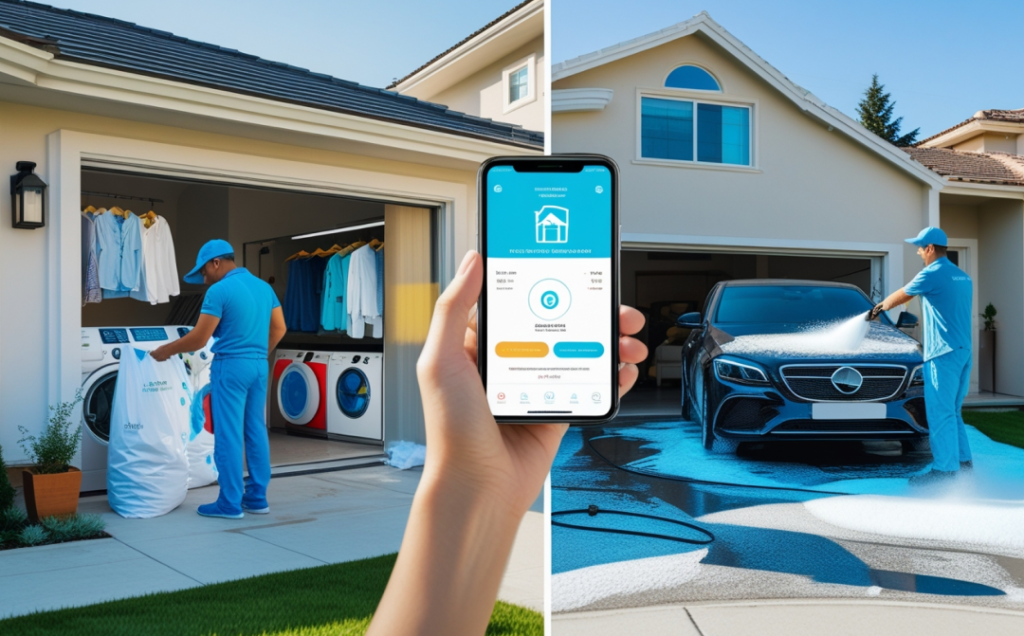
Businesses are riding a wave of on-demand apps that have steadily entered and become an integral part of our lives. Remember, on weekends, when you have to finish the daily chores, what do you do? Order groceries from Instacart, book home services from TaskRabbit, clean the laundry using Laundryheap, schedule a car wash from Hoora, and book an appointment from the telemedicine app for routine check-ups.
It indicates that life revolves around on-demand apps that meet people’s needs globally. So, just a few taps on your mobile, and the tasks you want will be accomplished. The utter convenience, growing preference to book services via the app, and service affordability are fueling the on-demand applications.
Different types of on-demand apps are ruling the market with different market shares in 2026, wherein pet care services are leading the market with a 35% share.
| Category | Market Share |
| Pet Care Services | 35% |
| Ride-Hailing | 32% |
| Food Delivery | 28% |
| Home Services | 15% |
| Healthcare Services | 12% |
| Grocery Delivery | 8% |
However, you would be surprised to know that on-demand apps that are known for instant services, live tracking, integrated payment, dynamic pricing, and feedback mechanisms fall into 4 categories that have rarely been discussed before. Here’s their explanation.
The top 4 categories of on-demand apps that are ceaselessly growing
Various sectors in the on-demand economy are growing at an accelerated pace. They are-
– On-demand service apps
On-demand service apps are those apps that connect service providers with service seekers and meet the needs of both parties. Service providers will get service requests for the desired work, and service seekers will instantly receive the required services. For example, Uber connects drivers with passengers, Netflix enables access to multimedia content, the Handy app connects handyman service providers with people, and Glamsquad connects salon service providers with users looking for beauty services.
– On-demand product apps
On-demand product apps connect and allow people to access and purchase goods from different sellers selling physical products in a few hours. For example, Instacart provides grocery products, GoPuff enables access to convenience store items, and Bloom & Wild facilitates ordering flower bouquets for different occasions.
– On-demand rental apps
On-demand rental apps connect rental service providers with people looking for rental services for a specific duration. For example, Airbnb connects travellers with property owners ready to host the accommodation for the short term, Car2Go facilitates getting a car on rent for a few days, and Zilok enables access to a wide range of products that users can take on rent based on certain terms and conditions.
– On-demand peer-to-peer apps
In on-demand peer-to-peer apps, no intermediaries are involved, as there’s a direct transaction between users and service providers. For example, TaskRabbit connects people with handyman service providers who mutually discuss the handyman service and make the payment accordingly.
Out of all categories, on-demand service apps are gaining traction because no infrastructure needs to be set up, nor do products need to be kept in stock. Let’s discuss the opportunities that it will present in the upcoming years.
Choosing the right mobile app development company is essential for ensuring your on-demand app is scalable, intuitive, and aligned with user expectations.
5 opportunities that businesses can tap with on-demand service apps
The evolving on-demand service market creates new business models and increases revenue, which suits start-ups and SMBS. The technological advancement makes them lead the journey.
– Hyper-personalization with AI
People always look for a personalization element that adds a human touch to the services, from laundry cleaning to getting the car washed at weekends. The service-based apps will boost conversion, retention, and ROI with AI-driven recommendations. For example, AI suggestions for the most favoured salon service provider in the Urban Company app delight users and allow them to book services quickly.
– Voice-enabled interface
According to Google Trends, 40% of searches will be voice-based in 2026. It’s a signal that optimizing the on-demand service app’s interface for voice input through Google or Alexa integration prepares your app for users looking to book services over voice command. For example, while driving a car, the user would like to book a massage in the evening; it’s possible just with a voice command: Hey Siri, book a massage at ABC salon today at 5:00 P.M.
– Sustainable services
Green services are getting popular everywhere to reduce the carbon footprint and make the environment safe. Different service apps are taking impressive initiatives to contribute to the environment. For example, grocery delivery prioritizes zero waste, ride-hailing apps encourage EV-based vehicle usage, and handyman services focus on upcycling.
– AR/VR-powered booking
In the crowded market, appealing to users and making them book the services is not a run-of-the-mill job. With AR tutorials, users are guided with extra information that makes them interested in booking the services. Virtual try-ons for home décor or hairstyles instil confidence for service bookings.
– Super apps launch
It’s an emerging phenomenon wherein on-demand service apps are not specifically offering only one service, but super apps will provide combined services for multi-service platforms. For example, one super app can offer ride-hailing, food delivery, and payment services, and it’s expected to retain users longer than a single service provider, as there will be no need to download multiple apps for different services.
Despite regulatory challenges, increased competition, and evolving consumer preferences, the on-demand service apps are witnessing growth in downloads, ROI, and ratings. It means technological progress is allowing apps to innovate and expand at scale. The growing demand is visible from the outstanding growth of the on-demand service apps.
Growing demand for service applications globally
– Uber is projected to get nearly 200 billion bookings from 210 million active users, generating $55 billion in revenue in 2026.
– Netflix continues to dominate the real-time streaming market with a 22% market share, wherein 310 million subscribers worldwide generate 42 billion in revenue in 2026.
– Hoora achieved over 1 million downloads in just 3 years for its unique on-demand car wash service concept. They stand as India’s second-largest car care platform and are gradually expanding their services in more cities.
– As the on-demand beauty service market is expected to reach $716 billion in 2026 and generate $335 billion in revenue, Glamsquad stands out with 35% growth in monthly downloads.
Choose the right app builders for on-demand services
The market stats, opportunities, and enormous growth of leading on-demand service apps showcase that the demand for service apps will remain in the future. Regardless of industry vertical (car wash, laundry, streaming, or ride-hailing), the growing demand hints that on-demand app development is a good idea. Collaborating with a reliable on-demand app development company helps shape your vision into a full-fledged solution targeting user needs.
However, selecting the right app builder is very important as it can make or break the app’s success. Identify whether the clone app service provider is reliable, communicates effectively, offers a wide range of customization options, and uses a tech stack. Consider these factors while choosing the on-demand service provider. Let’s start right away!
About the Author Bio:

- Name: Anil Patel
- Create our account with
- Email: [email protected] (Connected with Gravatar)
- USER ID: anilhpatel
- Website: https://nectarbits.com
- LinkedIn: https://www.linkedin.com/in/ani2nil/
As a Digital Marketing and content Strategist Planner at NectarBits, A Leading Software Development Company in the USA and a Saas Small business Solution in Canada, I am effectively behind the company’s content strategy, copywriting, brand communication, and operations. My prime focus is Content Marketing and ROI. I love writing and sharing knowledge. On weekends, I like to watch Tom and Jerry cartoons on TV.