
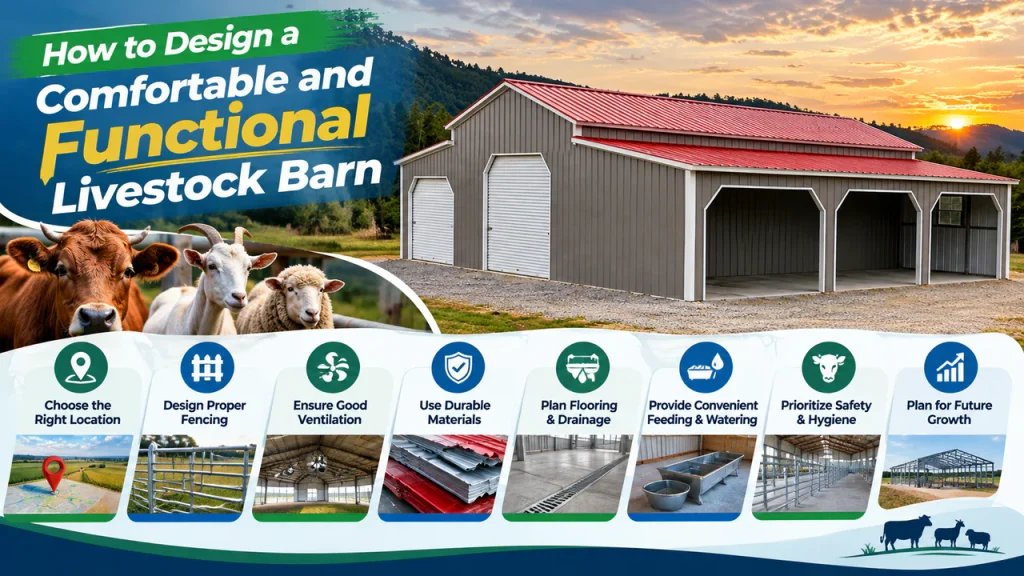
It’s a good idea to plan a comfortable and functional livestock barn. Animal health and farm management are improved with proper space, good ventilation, durable materials, clean flooring, and convenient feeding areas. The right design should satisfy your livestock requirements and make farm activities easier.
Whether you’re a cattle, sheep, or goat farmer, a barn that is designed properly can create a safe and comfortable environment for your animals.
Let’s examine the important considerations when creating one.
1. The First Step Is Choosing the Location
Pick a site that is appropriate for your livestock operation. Where you place your barn will impact drainage, ventilation, and animal comfort. Review your property before building and choose a location that is suitable for your farm activities.
It’s best to select some higher ground so that the rain doesn’t pool around the structure. The site should be suitable for farm vehicles, feed delivery, and transport of livestock.
Always take into account wind direction when site-planning the building. This can enhance the natural ventilation and help prevent strong cold winds. Also, ensure adequate natural light in the barn, but avoid exposing animals to excessive heat.
The right site choice can alleviate future drainage and access issues and lower maintenance costs.
2. Design the Fencing for Livestock Identification
Space Planning is a crucial aspect of Livestock Shelter Design. Space requirements vary for different animals, based on size, age, breed, and housing. For instance, cattle have a larger space requirement than sheep and goats. Likewise, animals that are held in the barn for long periods require space to lie down, feed, and move around.
Establish separate areas for various activities:
Rather than utilizing the whole barn as a single open area, try to divide the barn into sections designed for use.
- Food and water space: Place feeding troughs and water containers where they can be easily seen. Provide enough space to prevent competition among animals.
- Resting area: Make a comfortable resting area using clean and dry bedding. Cushioning and keeping animals comfortable can be achieved using straw or other appropriate bedding material.
- Storage space: Keep feed, bedding, cleaning materials, and farm equipment out of the way.
- Isolation area: Provide a separate space for sick, injured, and new animals. This is easier to keep track of their health and lessening the chances of disease spreading.
The layout is well organised and helps to keep daily activities more manageable and the environment cleaner.
3. Pay Attention to Air Flow & Air Ventilation
Ventilation is a key part of maintaining good conditions within a livestock barn. Bad airflow results in moisture, dust, ammonia, and other harmful gases building up. Effective Ventilation in Livestock Barns brings fresh air and removes stale air. It also helps to control the humidity level and heat accumulation inside.
Natural and Mechanical Ventilation Options:
Natural ventilation: Movement of air through the building by means of wind and differences in temperature. This can be facilitated with ridge vents, sidewall openings, and window positioning.
Mechanical ventilation involves the use of fans and other mechanical devices to keep air moving. It is especially beneficial in closed barns or areas where there is limited ventilation.
It is recommended to use both systems together if possible. Sidewall curtains, which can be adjusted, can also help to regulate airflow in changing weather. Keep in mind that different kinds of livestock and climates have different ventilation needs. Your artwork should let dogs and cats breathe while keeping them from getting draughty.
4. Choose durable and weather-resistant materials
All the building materials have an impact on the longevity, upkeep, and efficiency of your barn. Select materials that are suitable for local weather and safe for livestock. For many livestock operations, steel livestock barns are an economical choice, as a steel frame provides structural strength and allows for flexibility in building design. Steel is also free from common issues like termite infestation and rotting.
Likewise, metal feed barns come in a variety of styles, open-sided, closed-sided, or special roof designs. Here are some of the most significant materials to take into account:
| Building Material | Purpose |
| Steel framing | Provides structural strength and durability |
| Metal roofing | Protects against rain, snow, and other weather conditions |
| Concrete flooring | Offers a durable and easy-to-clean surface |
| Rubber mats | Improve cushioning in suitable resting areas |
| Insulation materials | Help manage indoor temperatures |
To choose materials, take into account the local climate, the needs of the livestock, maintenance expectations, and building codes.
5. Plan for Comfortable Flooring and Effective Drainage
The type of flooring directly impacts animals’ comfort, movement, and hygiene. An uneven and slippery surface will increase the chances of injury, and poor drainage will keep the barn damp.
Select flooring with adequate traction and easy to clean. A concrete finish to the surface and a slope to the surface may allow the use of concrete in feeding and working areas. Rubber mats can be used to increase the cushioning in resting areas.
Proper Drainage is important because:
Wastewater, urine, and excess moisture from the barn are removed by drainage systems. Standing water can cause odors and hygiene issues if it is not properly drained. Design appropriate drainage systems and sewerage collection systems for construction. Ensure that the floor slopes properly in the direction of the drain point.
Also, keep clothes and bedding clean and dry! Removing wet livestock bedding and build-up of waste regularly will help provide a better environment for livestock.
6. Ensure Feeding and Watering Areas are convenient
Feeding and watering should be provided in a way that enables the animals to be comfortable while consuming food and clean water. If feeding equipment is not positioned correctly, it can create unnecessary competition and cause difficulty in farm activities.
Ensure feeding troughs are available and located in accessible areas, with sufficient feeding space for animals. Water containers also need to be placed on an appropriate level and cleaned regularly. Automated feeding and watering systems may be useful in larger livestock operations to minimize manual labor. But select equipment to suit your stock type and feeding program.
Ensure feed storage areas are close to feed space, but do not interfere with animal movement. This can help you work out feeding more efficiently and keep unnecessary movement around the barn.
7. Ensure Livestock Safety and Hygiene
A productive barn should shield the livestock from harm, sickness, and stress. Safety characteristics should be incorporated into the original livestock shelter design and not retrofitted onto the building.
Watch for gates, fencing, electrical connections, and walkways. Eliminate sharp edges, protruding nails, etc., which may cause injury to animals. Another factor of importance is lighting. Good light enables animal checking, barn cleaning, feeding operations, etc. on the farm.
Hygiene should also be taken care of time and again. Create a cleaning schedule to include the removal of waste, changing of soiled bedding, cleaning feeding gear, and pest control. Use separate areas for different herds/lots of livestock to minimize unnecessary contact.
8. Plan for future expansion and changing needs
Your livestock requirements may change as your farm grows. You may have to add more animals, add another type of livestock, or have more storage. These changes can be planned for during construction, and this can save time and, in the long run, save costs of future modification.
Plan a flexible arrangement to accommodate alternative partitions and space for extra feeding and storage. Even before your building is complete, the building contractor can discuss expansion possibilities.
When considering the future requirements for farms, Steel Livestock Barns are a great option as they can be designed in various layouts. Consider the longer-term farming objectives and design a structure that will meet them.
9. Enhance Seasonal Comfort and Energy Efficiency
The protection of livestock from extremes of temperature is required all year round. Excessive heat can lead to heat stress, and cold weather and strong drafts can impact animal comfort.
Your barn should be designed according to the climate in your region. Appropriate roof insulation will minimize the heat flow through the roof, and roof overhang will also offer shade and protection from rain.
Provide ample air circulation, shade, and clean potable water during the summer. If exposed water pipes are located in cooler climates, cover them to prevent freezing and control the airflow with adjustable curtains. This is to keep the interior of the house comfortable while at the same time not limiting the fresh air that an animal requires.
Wrapping Up
Any Livestock Barn that’s going to be comfortable and functional begins with thoughtful planning. Emphasize adequate space, ventilation, long-lasting materials, proper drainage, and ease of feeding. Taking animal welfare and future farm needs into account can help you build a barn that benefits animals and makes life easier.