
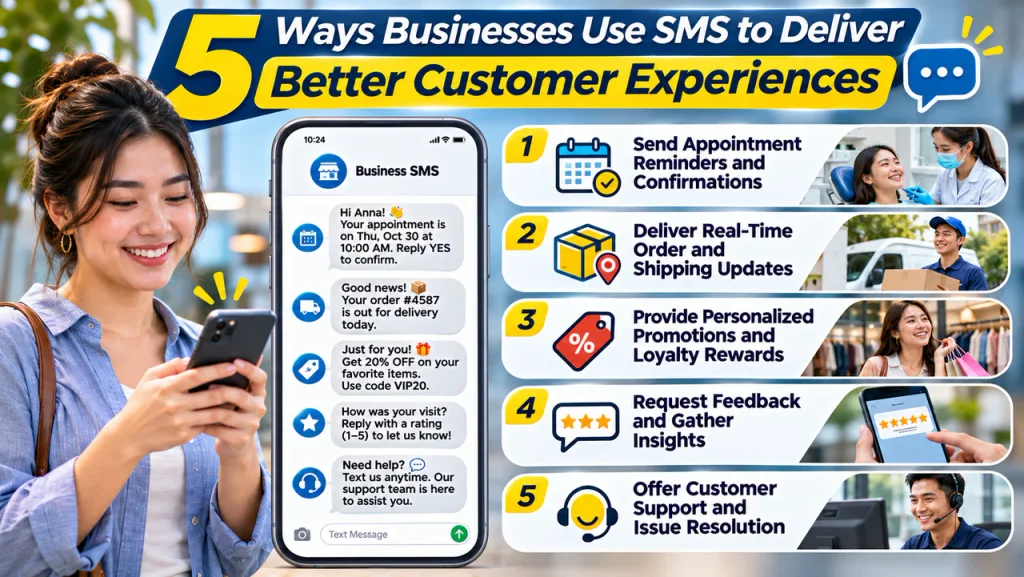
When was the last time you received a text message that actually made your day easier? More businesses are discovering that SMS isn’t just for promotions; it’s a powerful tool for creating seamless, personalized interactions that keep customers satisfied and loyal. Text messaging reaches people instantly, bypasses email clutter, and feels personal in a way that traditional channels often don’t. Companies across retail, healthcare, hospitality, and finance are leveraging SMS to solve real customer problems and build stronger relationships.
1. Sending Appointment Reminders and Confirmations
Appointment no-shows cost businesses money and waste valuable time slots. SMS reminders solve this problem by reaching customers directly on the device they carry everywhere. A dental office, for example, might send a text two days before an appointment, then another reminder the morning of the visit. These messages feel timely and non-intrusive, and research consistently shows that reminder texts significantly reduce no-show rates. Customers appreciate the courtesy reminder, and businesses gain predictability in their schedules. When confirmation messages include appointment details such as location, time, and provider name, customers feel more organized and confident heading into their visit.
2. Delivering Real-Time Order and Shipping Updates
Waiting for a package creates anxiety for many shoppers. SMS updates transform that waiting period into a positive experience by keeping customers informed at every step. When an order ships, when it’s out for delivery, or when it arrives at a local pickup location, a quick text notification eliminates the need for customers to constantly check their email or order status online. Customers can plan accordingly, knowing exactly when to expect their delivery. This transparency reduces support inquiries because customers have the information they need without having to contact customer service. Retail and e-commerce businesses that implement this strategy report higher satisfaction scores and fewer delivery-related complaints.
3. Providing Personalized Promotions and Loyalty Rewards
Generic mass emails get deleted, but personalized text messages get opened and read. Businesses use SMS to send targeted offers based on customer purchase history, preferences, or membership status. A coffee shop might text a regular customer about a promotion on their favorite drink, while a clothing retailer could send a loyalty member an exclusive discount ahead of a sale. These messages feel individually crafted rather than broadcast to thousands of people, and when timing and relevance align, customers feel valued rather than spammed.
For enterprises managing high-volume, cross-carrier messaging delivery at scale, syniverse provides the global messaging infrastructure that ensures promotional texts reach the right customers reliably and on time. The result is higher redemption rates for offers and increased repeat purchases compared to other marketing channels. Businesses that invest in reliable delivery infrastructure protect the customer experience at every point in the messaging chain. A well-timed offer that fails to arrive is an opportunity lost, making backend infrastructure as important as the message content itself.
4. Requesting Feedback and Gathering Insights
Understanding what customers think is essential for continuous improvement, but traditional surveys often get ignored. SMS surveys are different because they reach people where they already check their messages, and short text-based questions take seconds to answer. A restaurant might ask a customer to rate their recent visit with a quick reply, while a healthcare provider could request feedback about their appointment experience. This real-time feedback is far more candid than formal surveys sent weeks later, and it arrives while the experience is still fresh. Businesses that act on this feedback quickly demonstrate that they genuinely value customer input, which strengthens loyalty and trust.
5. Offering Customer Support and Issue Resolution
When customers face problems, they want quick answers. SMS provides a direct support channel that many customers prefer over phone calls or email. A customer with a billing question, technical issue, or account concern can text their bank, software provider, or utility company and receive a response within minutes. Some businesses use SMS to guide customers through simple troubleshooting steps, schedule callback appointments, or escalate issues to specialized teams. Because text conversations are asynchronous, customers can handle support on their own schedule without phone tag. This approach reduces pressure on support teams while giving customers a faster, more convenient way to solve problems.
Conclusion
SMS messaging has evolved from a marketing gimmick into a practical business tool that genuinely improves customer experiences. Whether through appointment reminders, shipping updates, personalized offers, feedback collection, or direct support, businesses that use SMS thoughtfully create more touchpoints with their customers and demonstrate responsiveness. The key is using SMS respectfully by sending relevant, timely messages rather than overwhelming customers with volume. As customer expectations for instant communication continue to rise, SMS becomes less of a bonus channel and more of a necessity for companies serious about retention and satisfaction. Organizations that master SMS today will have a competitive advantage tomorrow.