
In today’s competitive workplace, corporate trainers are expected to deliver more than just knowledge; they must drive behavioral change, improve collaboration, and enhance performance. This is where disc assessment certification becomes a valuable asset. By equipping trainers with a structured framework to understand personality and behavior, DISC certification enables more impactful training sessions, better communication strategies, and measurable organizational outcomes.
Understanding the DISC Model
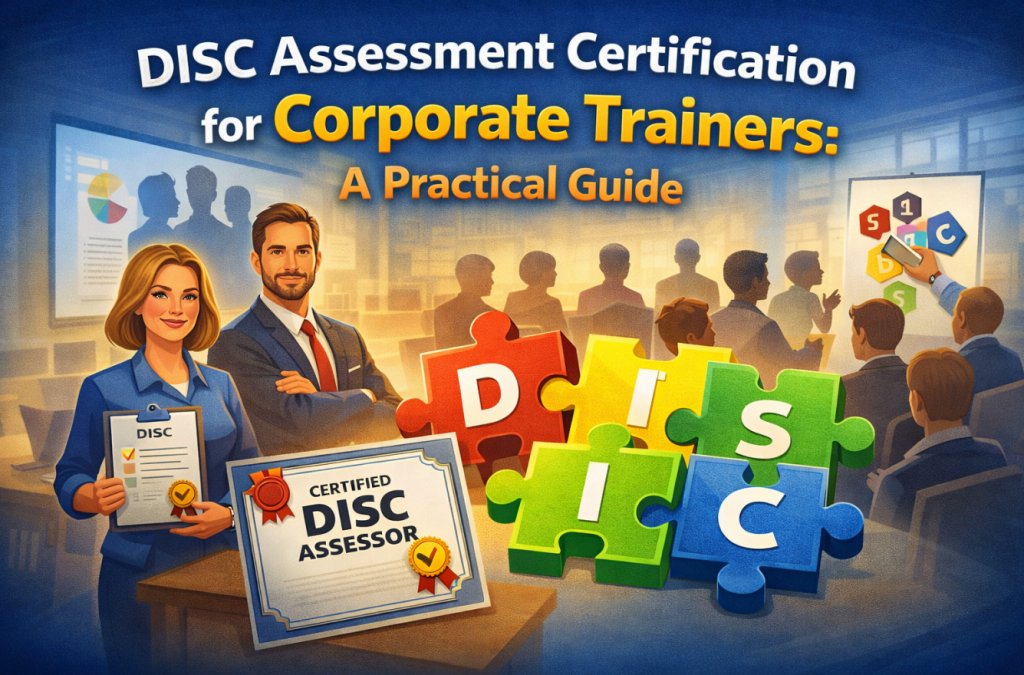
Before diving into certification, it’s essential to understand what DISC represents. The DISC model categorizes behavior into four primary personality styles:
- D – Decisive: Results-driven, decisive, sometimes forceful.
- I – Interactive: Social, enthusiastic, motivated by recognition.
- S – Stabilizing: Patient, reliable, supportive.
- C – Cautious: Precise, analytical, detail-focused.
Each individual typically exhibits a combination of these traits, with one or two being dominant. For corporate trainers, this model provides a powerful lens to understand how people communicate, respond to challenges, and engage in team environments.
Why Corporate Trainers Should Pursue DISC Certification
DISC certification is not just an added credential—it is a strategic tool that enhances training effectiveness. Here’s why it matters:
1. Enhances Training Personalization
Every group of learners is different. With DISC insights, trainers can tailor their delivery style to match participant preferences, ensuring higher engagement and retention.
2. Improves Communication Skills
Certified trainers learn how to adjust their communication based on personality types, making their sessions more relatable and impactful.
3. Strengthens Facilitation Techniques
DISC helps trainers manage group dynamics, handle conflicts, and encourage participation from all personality types.
4. Builds Credibility
Having a recognized certification increases trust among clients and organizations, positioning trainers as experts in behavioral training.
Key Components of DISC Assessment Certification
While programs may vary, most DISC certification courses include the following core elements:
Behavioral Theory and Framework
Understanding the science behind DISC, including how behavior is influenced by environment, motivation, and perception.
Assessment Interpretation
Learning how to read and explain DISC reports, including graphs, patterns, and behavioral tendencies.
Application Techniques
Practical methods to apply DISC in training sessions, coaching, leadership development, and team building.
Facilitation Skills
Techniques to conduct workshops, debrief assessments, and engage diverse audiences effectively.
How to Apply DISC in Corporate Training
Certification alone is not enough—the real value lies in application. Here’s how corporate trainers can use DISC effectively:
1. Customize Training Delivery
- Use direct, results-focused communication for D-types
- Incorporate interactive discussions for I-types
- Provide a supportive and structured environment for S-types
- Include detailed data and logical explanations for C-types
This approach ensures that every participant feels understood and engaged.
2. Improve Team Collaboration Workshops
DISC can be used to help teams understand each other’s working styles. Trainers can facilitate exercises where participants:
- Identify their own DISC styles
- Recognize differences in communication
- Develop strategies to work better together
This leads to stronger collaboration and reduced misunderstandings.
3. Enhance Leadership Development Programs
Corporate trainers can integrate DISC into leadership training by helping leaders:
- Adapt their management style to different team members
- Recognize team strengths and weaknesses
- Handle conflicts more effectively
Leaders who understand DISC are better equipped to motivate and guide their teams.
4. Use DISC in Conflict Resolution Training
Conflicts often arise from miscommunication rather than intent. DISC helps trainers teach participants:
- How different styles perceive situations
- Why certain behaviors trigger conflict
- How to adjust responses for better outcomes
This makes conflict resolution more practical and actionable.
Choosing the Right DISC Certification Program
Not all certification programs are created equal. Corporate trainers should consider the following factors:
Accreditation and Credibility
Choose a program that is widely recognized and respected in the industry.
Practical Application Focus
Look for courses that go beyond theory and provide real-world training scenarios.
Support and Resources
Quality programs offer ongoing support, materials, and tools that trainers can use in their sessions.
Flexibility
Online and hybrid options can be beneficial for working professionals.
Common Mistakes to Avoid
Even certified trainers can misuse DISC if they are not careful. Here are some common pitfalls:
Overgeneralizing Personality Types
Avoid labeling participants strictly as one type. DISC is a spectrum, not a box.
Ignoring Context
Behavior can change depending on the situation. Trainers should emphasize adaptability.
One-Time Use
DISC should not be a one-off activity. Its real value comes from continuous application.
Lack of Practice
Without consistent use, trainers may struggle to integrate DISC naturally into their sessions.
Measuring the Impact of DISC Training
For corporate trainers, demonstrating ROI is crucial. DISC-based training can be evaluated through:
- Improved team communication scores
- Reduced workplace conflicts
- Increased employee engagement
- Better leadership effectiveness
Collecting feedback and tracking these metrics helps validate the effectiveness of DISC training programs.
The Future of DISC in Corporate Training
As organizations continue to prioritize soft skills, emotional intelligence, and collaboration, the demand for DISC-certified trainers is expected to grow. The model’s simplicity and practical application make it highly relevant in modern workplaces, especially in hybrid and remote environments.
Corporate trainers who invest in DISC certification today are positioning themselves for long-term success in an evolving training landscape.
Final Thoughts
DISC assessment certification offers corporate trainers a structured and practical approach to understanding human behavior. It transforms training from generic content delivery into a personalized, engaging, and results-driven experience.
By mastering DISC, trainers can not only enhance their own effectiveness but also create lasting impact within organizations. The key lies in continuous learning, thoughtful application, and a commitment to helping individuals and teams perform at their best.