
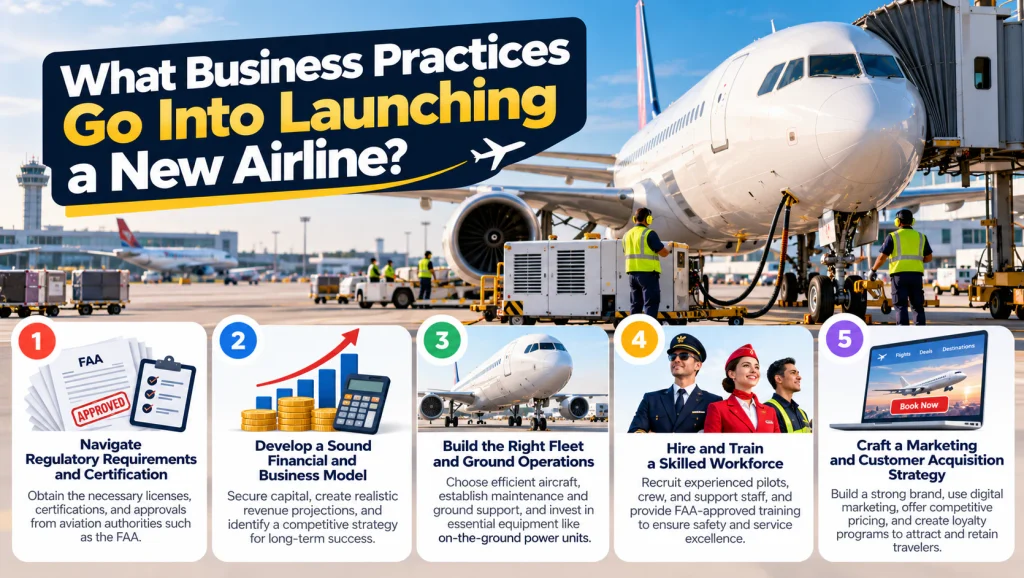
Launching a new airline ranks among the most complex and capital-intensive ventures in the entire business world. It demands a careful blend of regulatory compliance, financial planning, operational logistics, and customer strategy. While the dream of starting an airline carries genuine excitement, the reality calls for meticulous preparation and a deep understanding of how the aviation industry actually works. Entrepreneurs who successfully navigate these challenges can build companies capable of competing in one of the most demanding markets on the planet.
Navigating Regulatory Requirements and Certification
Before a single flight takes off, an airline must secure the appropriate licenses and certifications from aviation authorities. In the United States, that means obtaining an Air Carrier Certificate from the Federal Aviation Administration (FAA), along with operating specifications that govern routes, aircraft types, and safety standards. This process can stretch across months or even years, requiring extensive documentation, safety audits, and compliance reviews at every turn. Founders need to engage experienced aviation attorneys and regulatory consultants early to avoid costly delays down the road. Building strong relationships with regulatory bodies from the outset sets a positive tone for long-term operations.
Developing a Sound Financial and Business Model
Few industries demand as much upfront capital as aviation. A new airline must account for aircraft acquisition or leasing, crew hiring and training, insurance, airport fees, fuel costs, and technology infrastructure, all before a single ticket is sold. Investors and lenders look closely at revenue projections, route viability, and competitive positioning before committing funds. Many successful startups choose a niche strategy, such as targeting underserved regional routes or offering ultra-low-cost fares, to differentiate themselves from established carriers. A well-structured financial model with realistic assumptions is ultimately the backbone of any credible airline business plan.
Building the Right Fleet and Ground Operations
Choosing the right aircraft is a defining decision that touches everything from fuel efficiency to passenger capacity and long-term maintenance costs. Most new airlines start with a small, standardized fleet to reduce operational complexity and simplify training requirements across their workforce. Beyond the aircraft themselves, setting up reliable ground operations is equally critical to daily performance. This includes establishing contracts with airport ground handlers, investing in maintenance facilities, and sourcing the right equipment to keep planes running smoothly. When outfitting gate infrastructure, ground crews rely on on-the-ground power units to deliver essential electrical power to parked aircraft, cutting engine wear and reducing fuel consumption during turnaround times. Dependable ground support infrastructure directly shapes on-time performance and overall operational efficiency.
Hiring and Training a Skilled Workforce
An airline’s success hinges largely on the quality of the people behind it. Pilots, flight attendants, mechanics, dispatchers, and customer service staff all play vital roles in delivering a safe and satisfying travel experience to every passenger. Recruiting experienced aviation professionals is fiercely competitive, particularly in markets where pilot shortages continue to push salary expectations upward. New airlines must invest heavily in FAA-approved training programs and maintain rigorous standards to satisfy both regulators and the traveling public. Building a strong company culture from day one helps attract top talent and keeps costly employee turnover from eroding the operation over time.
Crafting a Marketing and Customer Acquisition Strategy
Even the safest, most efficiently run airline will struggle if travelers simply don’t know it exists. A smart marketing strategy covers brand development, digital advertising, loyalty programs, and partnerships with travel agencies and booking platforms. New airlines often lean on social media to generate buzz and connect directly with potential customers in a cost-effective way. Pricing strategy plays a major role as well, since introductory fares and promotional campaigns can drive early bookings and build a loyal customer base faster than almost any other tactic. Understanding the target demographic and tailoring the brand message accordingly gives a new carrier a meaningful edge in an already crowded marketplace.
Conclusion
Launching a new airline is a monumental undertaking that demands expertise across finance, law, operations, human resources, and marketing. Each component of the business must work in harmony for the venture to succeed, and overlooking even one area can create serious problems when it matters most. Entrepreneurs who approach the process with thorough research, strong partnerships, and a flexible mindset give themselves the best chance of building something viable and lasting. The aviation industry rewards preparation and punishes shortcuts, making careful planning not just advisable but absolutely essential.

