
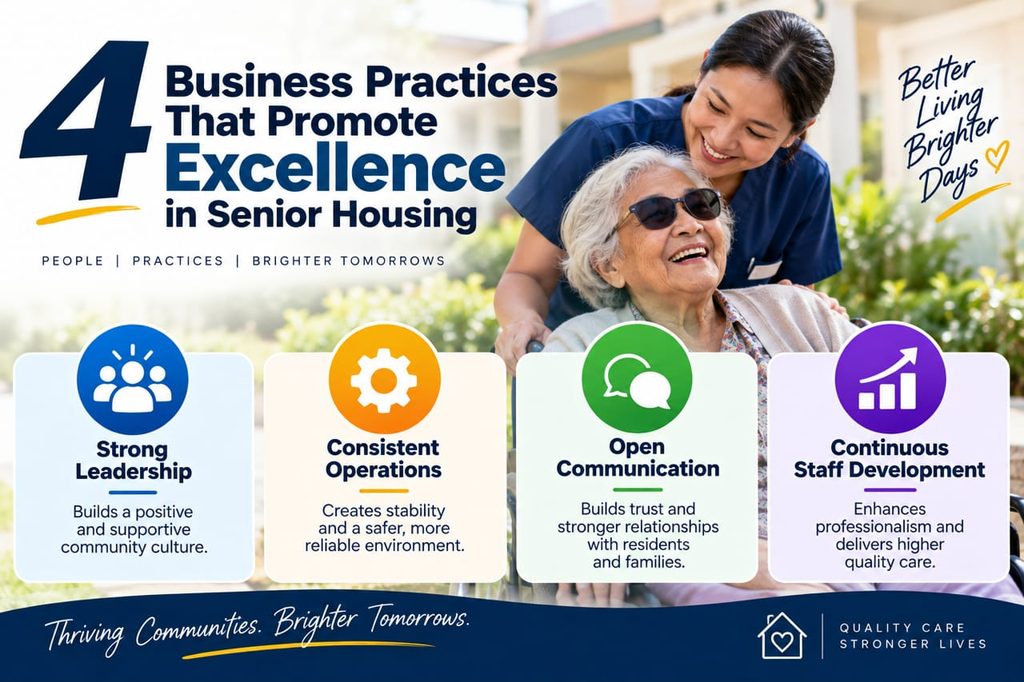
Excellence in senior housing is built on thoughtful operational practices, strong leadership, and a commitment to creating environments where older adults feel respected, supported, and genuinely valued. Communities that prioritize quality across daily operations, communication, and resident experience establish a foundation that promotes long-term stability and trust. When business practices are intentionally designed to elevate care, strengthen team performance, and enhance resident wellbeing, senior housing communities become places where individuals feel confident and connected.
Leadership Approaches That Strengthen Community Culture
Leadership plays a defining role in shaping the culture and daily experience within senior housing. Effective leaders set clear expectations, support team development, and model the values that guide resident interactions. Communities such as Virginian demonstrate how strong leadership can influence consistency, professionalism, and overall resident satisfaction. Concepts like leadership alignment and team cohesion highlight how leadership practices create environments where staff feel supported and residents experience dependable care. When leaders prioritize communication, collaboration, and accountability, the entire community benefits.
Operational Consistency That Supports Daily Stability
Operational consistency is essential for maintaining a predictable and reassuring environment. Clear procedures, structured routines, and well-defined responsibilities help staff deliver care smoothly and confidently. Concepts like operational clarity and workflow reliability show how consistent operations reduce confusion and strengthen resident trust. When daily tasks are organized and predictable, residents feel more secure, and staff can focus on meaningful engagement rather than troubleshooting preventable issues.
Communication Practices That Build Trust and Transparency
Strong communication is one of the most influential business practices in senior housing. Transparent updates, approachable dialogue, and consistent messaging help residents and families feel informed and reassured. Concepts like family communication and resident engagement highlight how communication strengthens relationships and supports long-term satisfaction. When staff communicate clearly and respectfully, families gain confidence in the community’s commitment to quality, and residents feel more connected to the people who support them.
Staff Development That Enhances Professionalism and Care Quality
Ongoing staff development is essential for maintaining excellence in senior housing. Training programs, mentorship opportunities, and continuing education help team members stay informed about best practices and evolving care standards. Concepts like professional development and skill advancement show how development strengthens both confidence and competence. When staff feel supported in their growth, they deliver care with greater empathy, consistency, and professionalism, directly enhancing the resident experience.
Conclusion
Excellence in senior housing is shaped by strong leadership, operational consistency, transparent communication, and ongoing staff development. When communities prioritize these practices, they create environments where residents feel respected, families feel confident, and teams feel empowered to deliver high-quality support every day.

