
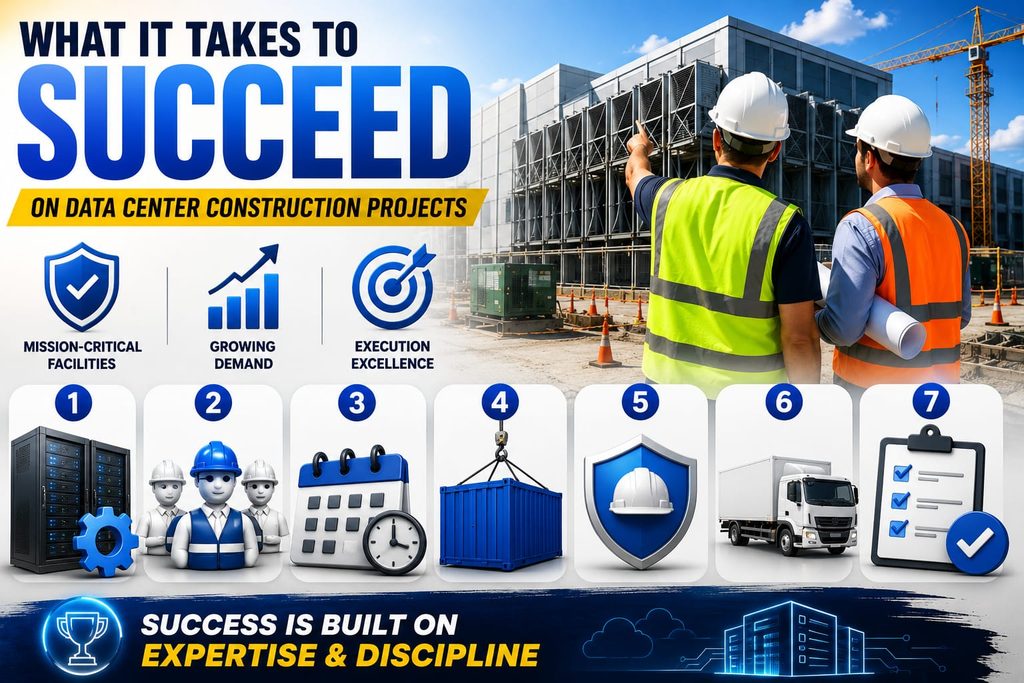
Data center construction ranks among the most demanding segments of the commercial building industry. These facilities require an extraordinary level of precision, coordination, and technical expertise that goes well beyond what a typical construction project demands. With the global appetite for digital infrastructure growing at a remarkable pace, more developers and owners are investing in these projects than ever before. Understanding what separates successful data center builds from costly failures is essential for anyone looking to compete seriously in this specialized space.
Understanding the Technical Complexity Involved
Data centers are not ordinary buildings, and anyone who treats them as such will find out quickly why that approach fails. They house mission-critical systems that must operate continuously, and the construction of these facilities reflects that demanding reality at every turn. From advanced power distribution systems and redundant cooling infrastructure to highly specialized cabling and fire suppression setups, every element requires deep technical knowledge. Contractors who thrive in this space make it a priority to invest in training, hire specialists with relevant backgrounds, and stay current on evolving industry standards.
Assembling the Right Team of Qualified Contractors
One of the most critical decisions on any data center project is choosing who actually builds it. Owners and general contractors need to vet subcontractors with exceptional care, since a weak link in the project team can quietly undermine the entire schedule and budget. This is where efficient contractor prequalification management becomes a genuine competitive advantage worth taking seriously. Thorough prequalification processes help project teams evaluate experience, financial stability, safety records, and technical capabilities before a single shovel hits the ground. When screening the volume of specialized subcontractors that data center projects demand, teams relying on an efficient contractor prequalification management platform can standardize evaluations, reduce administrative burden, and make faster, more informed hiring decisions. Taking shortcuts in this area leads to preventable problems, and the high-stakes nature of data center construction makes those problems especially damaging.
Managing Tight Schedules Without Sacrificing Quality
Speed matters enormously in data center construction, but it has to be the right kind of speed. Owners are often working against aggressive timelines tied to capacity demands, lease agreements, or customer commitments that leave very little room for slippage. At the same time, rushing through critical construction phases without proper quality controls creates risks that can surface long after the project is complete. Successful teams approach scheduling with a clear-eyed view of what can realistically be accelerated and what simply cannot be rushed. Clear communication between trades, proactive risk management, and early procurement of long-lead items like generators and switchgear are all strategies that help teams hit their targets without compromising the finished product.
Navigating Procurement and Supply Chain Challenges
The equipment that goes into a data center often carries lead times stretching several months, and sometimes considerably longer. Specialized transformers, uninterruptible power supplies, cooling units, and precision air handlers are all subject to supply chain pressures that have intensified significantly in recent years. Construction teams that plan ahead and build strong relationships with equipment suppliers give themselves a meaningful advantage over the competition. Early engagement with manufacturers and distributors helps teams identify potential delays before they become full-blown schedule problems. Building contingency plans into the project timeline and keeping a close eye on procurement milestones is simply smart practice on any data center build.
Prioritizing Safety in a High-Complexity Environment
Safety on a data center construction site deserves its own conversation. The combination of high-voltage electrical work, confined spaces, and the sheer volume of trades working in close proximity creates a risk environment that demands vigilant, consistent oversight. Successful project teams set the tone for safety from day one, establishing clear expectations and holding everyone on the site accountable to the same standards. Regular safety audits, toolbox talks, and structured incident reporting processes all contribute to a culture where workers feel genuinely empowered to identify and address hazards before they become injuries. Beyond protecting people, a strong safety record is a meaningful indicator of the overall professionalism and reliability that defines a top-tier construction team.
Conclusion
Data center construction projects reward teams that come prepared, stay disciplined, and treat every detail as worth getting right. From the initial selection of qualified contractors to the final commissioning of complex systems, there is no stage where complacency is acceptable. The teams that consistently deliver successful outcomes in this space share a commitment to technical excellence, rigorous planning, and open communication at every level of the project. As demand for digital infrastructure continues to accelerate, the contractors and project managers who build strong reputations in data center construction will find no shortage of opportunity waiting for them.