
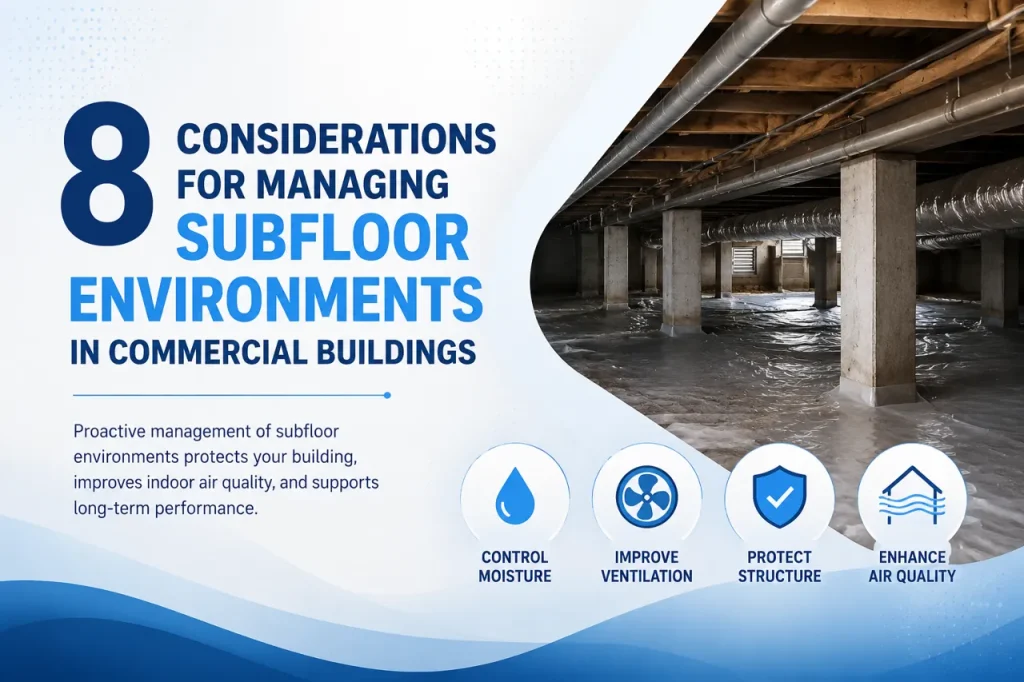
Managing subfloor environments is essential for maintaining the long term performance, safety, and efficiency of commercial buildings. These hidden spaces influence everything from structural stability to indoor air quality, yet they are often overlooked until problems arise. Moisture, ventilation, temperature fluctuations, and material conditions all play a role in how well a subfloor environment supports the building above it. By understanding the key considerations involved in managing these areas, property owners and facility managers can take proactive steps that protect the building and create a healthier, more reliable environment for occupants.
Assessing Moisture Levels and Sources
Moisture is one of the most significant threats to subfloor environments. Commercial buildings often face moisture challenges due to groundwater, plumbing leaks, or humidity that becomes trapped beneath the structure. Before implementing any management strategy, it is important to identify where moisture is entering and how severe the issue may be. Early detection helps prevent long term damage and reduces the likelihood of mold growth or structural deterioration. When moisture is properly controlled, the subfloor environment becomes more stable and better equipped to support the building’s overall performance.
Evaluating Structural Conditions Beneath the Floor
The structural components located beneath the floor play a critical role in supporting the building. Beams, joists, and foundational materials must remain strong and dry to maintain stability. If moisture or age related wear has already caused deterioration, repairs may be necessary before additional improvements can be made. Commercial properties sometimes require specialized services such as a reputable crawl space structural repair in Charlotte when damage is discovered in these hidden areas. Ensuring that the structure is sound before implementing new systems helps prevent future complications and supports long term building integrity.
Ensuring Proper Ventilation and Airflow
Ventilation is essential for maintaining a balanced subfloor environment. Without adequate airflow, humidity can accumulate and create conditions that encourage mold growth or material decay. Commercial buildings often require mechanical ventilation systems to maintain consistent airflow beneath the floor, especially in areas with limited natural circulation. Proper ventilation helps regulate temperature, reduce moisture buildup, and support a healthier environment throughout the building. When airflow is managed effectively, the subfloor remains more stable and less susceptible to environmental fluctuations.
Selecting Durable Materials for Long Term Performance
The materials used in subfloor environments must be able to withstand moisture, temperature changes, and daily operational demands. Commercial buildings benefit from using high quality vapor barriers, insulation, and protective coatings that resist wear and maintain their effectiveness over time. Choosing durable materials helps prevent future issues and reduces the need for frequent maintenance. When materials are selected with long term performance in mind, the subfloor environment becomes more resilient and better equipped to support the building’s needs.
Monitoring Temperature and Humidity Levels
Temperature and humidity play a major role in the condition of subfloor environments. Excess humidity can lead to condensation, mold growth, and material degradation, while extreme temperature fluctuations can affect structural components. Monitoring systems that track these conditions help facility managers respond quickly to changes and maintain a stable environment. Consistent monitoring also provides valuable data that can guide future improvements and ensure that the subfloor remains within safe and manageable ranges.
Addressing Drainage and Water Management
Effective drainage is essential for preventing moisture from accumulating beneath commercial buildings. Poor drainage can lead to standing water, soil saturation, and long term structural concerns. Ensuring that the surrounding landscape directs water away from the building, maintaining gutters and downspouts, and installing proper drainage systems all contribute to a healthier subfloor environment. When water is managed effectively, the risk of moisture related issues decreases significantly, supporting the building’s long term stability.
Implementing Preventive Maintenance Practices
Preventive maintenance is one of the most effective ways to manage subfloor environments. Regular inspections, cleaning, and system checks help identify potential issues before they become serious problems. Maintenance routines should include evaluating structural components, monitoring moisture levels, and ensuring that ventilation and drainage systems are functioning properly. By staying proactive, facility managers can extend the lifespan of building materials and reduce the likelihood of costly repairs.
Supporting Indoor Air Quality and Occupant Comfort
The condition of the subfloor environment directly influences the air quality inside the building. Moisture, mold, and poor ventilation can allow contaminants to enter occupied spaces, affecting comfort and wellbeing. Managing the subfloor environment helps maintain cleaner air and supports a healthier indoor atmosphere. When the space beneath the building is dry, well ventilated, and structurally sound, the entire building benefits from improved comfort and reduced environmental concerns.
Conclusion
Managing subfloor environments in commercial buildings involves assessing moisture, evaluating structural conditions, ensuring ventilation, selecting durable materials, monitoring environmental factors, improving drainage, maintaining preventive practices, and supporting indoor air quality. These considerations work together to create a stable, efficient, and long lasting foundation for the building and its occupants.