
A small office can contain an entire company’s working memory: active projects, customer records, equipment settings, and the supplies people reach for without thinking. Moving those items is only part of the job. The team also needs a clear way to finish work in one location and resume it in another.
A useful move plan follows the work itself. It identifies what must remain available, who makes each decision, and what needs to function when employees arrive.
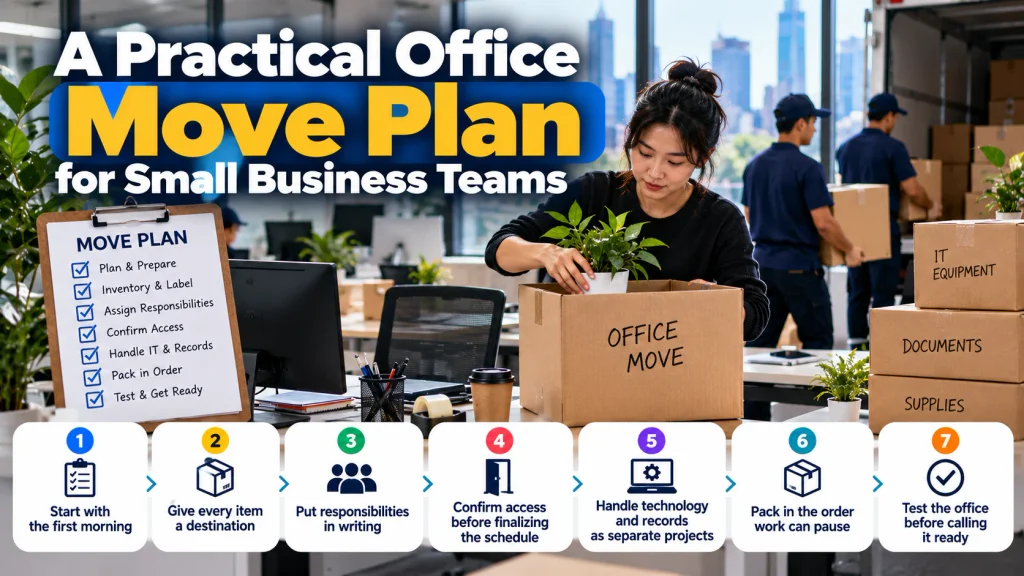
Start with the first morning
Before ordering boxes, write down the tasks your team needs to complete on its first morning in the new office. A design studio might need working laptops and access to project files. A distributor might need its order system, printer, and shipping materials.
Build a short readiness checklist around those tasks. Include internet access, essential furniture, account access, phone routing, and any equipment that supports customer commitments. Assign a person to verify each item. This gives the move a practical finish line and helps distinguish urgent setup work from unpacking that can wait.
Give every item a destination
Create an inventory organized by where items will go. Use the new floor plan to assign simple destination codes, such as Reception, Desk 04, or Meeting Room B. Put the same code on the relevant furniture, equipment, and boxes.
Record items that will be donated, stored, returned to a supplier, or left behind. Resolve these decisions before packing begins so that unwanted furniture does not become a problem at the new address.
For a Bay Area office, sharing the inventory and floor plan with Rocket Science Moving gives the team a concrete starting point for discussing the physical move. Include photographs of large furniture and any items that need individual handling instructions.
Put responsibilities in writing
Choose one internal coordinator who can approve placement decisions and answer questions during the move. Give that person a backup and a contact list covering building management, the movers, your internet provider, and whoever supports your computers.
Then assign tasks explicitly. Who packs shared cupboards? Who labels monitors? Who disconnects the printer, and who checks it afterward? Confirm which furniture tasks are included in the moving agreement.
Keep these responsibilities in one shared document with deadlines. A short list with named owners is more useful than a long checklist that everyone assumes someone else is handling.
Keep a separate budget for expenses outside the transport quote, such as internet installation, replacement cables, cleaning, temporary workspaces, or overlapping occupancy. Mark each figure as confirmed or estimated. This helps the coordinator see which decisions still affect the total and avoids treating an early moving estimate as the complete project budget.
Confirm access before finalizing the schedule
Walk through both properties and record practical restrictions. Ask building management about loading access, elevator reservations, permitted working hours, insurance documentation, and how the crew will enter secured areas. Confirm requirements with each building instead of assuming they are the same.
When comparing office moving services in the Bay Area, provide these details alongside your inventory. Also explain whether employees will still be working in part of the space while packing or loading takes place.
Agree on a realistic sequence for furniture removal, delivery, and placement. Leave room in the schedule for an access delay or a setup problem, and decide who will communicate changes to staff.
Handle technology and records as separate projects
Arrange for the person responsible for IT to oversee equipment shutdown, backups, and reconnection. Photograph cable connections where useful and label accessories with the device they belong to. Keep chargers, docking stations, and adapters together so that a workstation does not arrive without the pieces needed to use it.
Confirm that important files can be accessed from the planned temporary workspace. A completed backup is more useful when someone has checked that the necessary files can be recovered.
Assign custody of confidential documents and business devices. Use sealed, clearly tracked containers where appropriate, and keep passwords or access credentials out of visible box labels.
Pack in the order work can pause
Begin with items that the team rarely uses, such as archived reference materials, spare chairs, and decorative objects. Keep active project materials and everyday equipment available until their planned cutoff time.
Prepare a clearly marked box for immediate use containing basic supplies, labels, tape, and the printed floor plan. Give each employee a separate plan for essential personal work equipment.
Tell customers and suppliers about changes that affect them: delivery instructions, the address for appointments, temporary contact arrangements, or revised response times. Share a specific update when the timing is confirmed rather than promising an interruption-free move.
Test the office before calling it ready
After delivery, check the inventory and record any missing items, visible damage, or placement issues. Then work through the readiness checklist you created at the beginning.
Test a normal business task from start to finish. Can someone receive a customer inquiry, open the relevant files, complete the work, and send a response? Check printing, calls, and meeting equipment if your team depends on them.
Keep a short list of unresolved issues with an owner and a deadline for each. That gives employees a clear route back to their work while the remaining boxes are unpacked.