
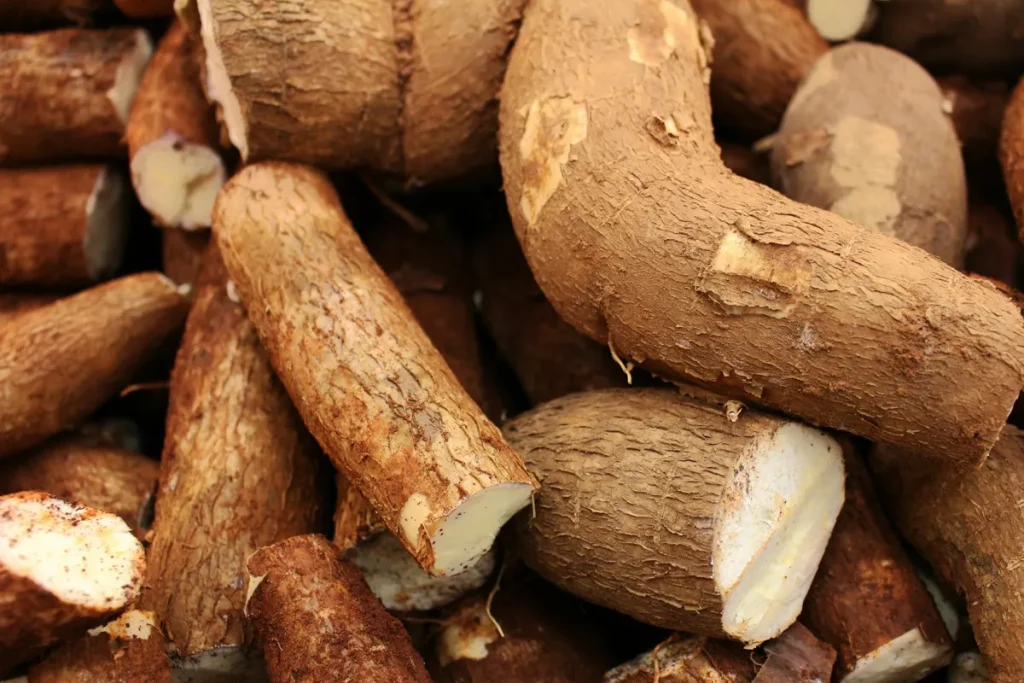
Many people still misunderstand what a feasibility study is — its role is critical when considering large agricultural or energy projects. With climate change, energy security, and rising fuel prices pressing concerns, the question arises: can cassava be a viable feedstock for bio-ethanol production in the Philippines today? While earlier studies (circa 2008) evaluated cassava versus sugarcane, sweet sorghum and corn under fixed assumptions, new policy shifts, updated production capacities, and changing costs require a fresh assessment.
This article reviews current laws, updated production data, economic factors, environmental implications, and the real prospects for cassava bio-ethanol—based on authoritative, recent sources.
Policy & Regulatory Update
- Biofuels Act of 2006 (RA 9367) remains foundational: it mandates local biofuel blending in all motor fuels. For gasoline, the legal blend is E10 (10% ethanol) since 2012; for diesel, the minimum was B2 (2% coco methyl ester or CME).
- Higher biodiesel mandate: By Department Circular No. 2024-05-0014, the biodiesel blend (CME) was increased to 3% (B3) effective 1 October 2024, with planned increments to B4 (4%) in October 2025 and B5 (5%) in October 2026.
- Ethanol blend options: The government allows downstream oil industry players voluntarily to offer gasoline with 20% ethanol blend (E20), but this is not yet mandatory. The legal requirement remains at E10.
- Moratorium lifted for molasses-based bio-ethanol plants: Previously, sugar mills were restricted from constructing or expanding ethanol plants due to regulations limiting practical capacity. As of 2025, the Sugar Regulatory Administration (SRA) has amended rules, allowing new or expanded molasses-based bio-ethanol plants provided that their capacity does not exceed their own molasses output.
Current Production Capacities & Feedstock Situation
- Bio-ethanol capacity vs required supply: As of end-2024, the existing capacity of bio-ethanol producers is not fully sufficient. A recent DOE report estimates that mandated supply for E10 (10% ethanol in gasoline) needs more than current production capacity, especially if E20 becomes more widely used.
- Cassava production data: Cassava remains a widely produced root crop. A 2024 report notes average yield of ~11,834 kg per hectare, with regions such as Northern Mindanao (39.3% of national output), BARMM (30.8%), and Cagayan Valley producing substantial proportions.
- Feedstock alternatives: Currently, molasses (a byproduct of sugarcane) is the dominant feedstock for bio-ethanol plants in the country. Corn and cassava are acknowledged in earlier studies, but operational, large-scale cassava-fed bio-ethanol plants remain limited. The moratorium easing for molasses-based plants seeks to stimulate growth in ethanol output.
Economics & Feasibility: What Has Changed
Some cost and financial factors from older studies still broadly apply (cassava’s high starch content, drought resistance, etc.), but key economic parameters need updating:
| Factor | Updated Observation |
|---|---|
| Feedstock cost volatility | Coconut oil (CME feedstock) prices have soared internationally—this has directly affected biodiesel mandates and the ability to increase blends. (The Manila Times) Cassava costs likewise fluctuate depending on region, yield, and whether tubers are purchased as food or industrial feed. |
| Yield potentials | Older study yields (for cassava tubers per hectare) remain roughly similar in optimal areas, but many marginal lands produce far less. Recent PSA data shows yields in aggregate that point to room for improvement via better farming practices. (nast.dost.gov.ph) |
| Processing cost, infrastructure, transport | Transport infrastructure remains a bottleneck. Because cassava is bulky and perishable, delays in post-harvest handling, drying, storage, and milling add to costs. New policies encourage decentralization of processing (closer to farms) to reduce logistics cost. (Earlier studies stressed similar points, and recent reports underscore the same.) |
| Market & demand risk | Mandatory demand for ethanol is legally E10; any shift to E20 is voluntary. Without binding demand increase, investors may hesitate to build cassava-based ethanol plants due to feedstock supply risk. Additionally, price competitiveness with imported ethanol or ethanol from molasses remains a concern. |
Pros & Cons: Cassava’s Edge vs Limitations
Advantages
- Crop resilience, especially in marginal or drought-prone regions; minimal maintenance once established.
- High starch content, which translates into potential ethanol yield per hectare that in good soil & conditions rivals sugarcane or sweet sorghum.
- Rural development and job creation, particularly in cassava-growing provinces (e.g., Northern Mindanao, BARMM).
Challenges
- Feedstock cost: When cassava tubers compete with food or other industrial uses, prices can rise. Also, costs of fertilizer, labor, and transport are large cost components.
- Processing and scale: Ethanol plants require consistent feedstock supply, reliable transport, and facilities. Establishing large plantations (e.g., 10,000 hectares) takes years.
- Policy uncertainty: Because ethanol mandate increases (beyond E10) are not yet mandatory, there is risk for investors.
Case Status: Has Cassava Bio-ethanol Taken Off?
Despite earlier feasibility studies (like one funded by BAR in 2008), as of 2025:
- There have been no major publicly disclosed, large-scale cassava-based bio-ethanol plants fully operating at scale converting cassava into ethanol and serving the fuel blend market.
- Existing ethanol plants are primarily molasses/sugarcane-based. The moratorium on molasses-based plant construction has been lifted so further capacity may be built.
- Cassava remains valued for food, animal feed, and starch industries; its use as ethanol feedstock remains more speculative and in planning/trial stages in many areas.
Sensitivity & Financial Modelling Insights
Updating the sensitivity analyses from earlier studies:
- Yield increases (for cassava) of 10-15% can meaningfully improve project net incomes, but depend heavily on local farming practices, input costs, and access to improved planting materials.
- Cost reductions in logistics, drying, and milling are high-leverage: even small percentage reductions in post-harvest and transport costs can shorten payback period significantly.
- Interest rates, financing terms still matter: access to lower-cost capital or subsidies (for example for biofuel plant construction or for farmers) can tip feasibility.
Environmental & Social Considerations
- Greenhouse gas (GHG) emissions: Bio-ethanol from cassava emits less CO₂ per unit energy than fossil gasoline in life-cycle assessments, especially when feedstock is produced with lower synthetic fertilizer use and toxic waste is managed properly.
- Land use trade-offs: Large plantations may compete with food crops or lead to deforestation or soil degradation if poorly managed.
- Water & soil impacts: Cassava is more tolerant, but overuse of fertilizers or poor practices can cause environmental damage.
The government, NGOs, and communities must be involved in ensuring sustainable, socially sensitive projects.
Recommended Strategy for Stakeholders
For investors, policymakers, farmers, and researchers, a viable path forward includes:
- Pilot projects of cassava bio-ethanol in regions with high cassava production (e.g., Northern Mindanao, BARMM) combining improved planting materials, contract farming, and localized processing.
- Policy incentives: subsidies or tax relief, guaranteed purchase or blending mandates for E20, feedstock price stabilization mechanisms.
- Infrastructure investment: roads, drying facilities, access to grinding/milling equipment near farms to cut transport and post-harvest losses.
- Research & extension: improved cassava varieties, higher current yields, disease resistance, better starch-to-ethanol conversion efficiencies.
- Environmental safeguards: ensuring food security is not compromised; implementing best practices in soil, water use; monitoring emissions.
Conclusion
Cassava bio-ethanol remains an intriguing possibility for the Philippines. It has many inherent advantages—resilience, high starch yield, potential for rural development. But as of 2025, it has not yet fully matured into a large-scale industrial player for bio-ethanol feedstock, largely due to supply chain challenges, feedstock cost, and uncertain policy backing for blends above E10.
For cassava bio-ethanol to become viable commercially, coordinated efforts in policy (especially making ethanol blend mandates more predictable), infrastructure, financing, and sustainable farming are essential. Those conditions are slowly improving: moratoriums are being lifted, biodiesel blending is increasing, bio-ethanol capacity lags but can grow if anchored by demand.
Call to Action
If you’re a farmer, investor, or policy-maker, now is the time to explore cassava bio-ethanol: participate in any pilot programs, support local feedstock aggregation, lobby for clearer mandates and support. For researchers, more region-specific studies on cost of production, feedstock yield under current climatic stress, and processing cost models will help de-risk investments. Let’s unlock cassava’s potential for a cleaner, self-reliant energy future in the Philippines.
References
- Department of Energy Philippines. (2024-05-20). DOE mandates higher biodiesel blend beginning October 2024. GOVPH. Retrieved from https://legacy.doe.gov.ph/press-releases/doe-mandates-higher-biodiesel-blend-beginning-october-2024
- Higher biofuel blend takes effect in October. Philstar.com. (2024, May 21). Retrieved from https://www.philstar.com/business/2024/05/21/2356627/higher-biofuel-blend-takes-effect-october
- Department of Energy Philippines. (2024). Energy Investment Kit [PDF]. Retrieved from https://doe.gov.ph/sites/default/files/pdf/e_ipo/2024-Energy-Investment-Kit.pdf
- Government lifts moratorium on new bioethanol plants. The Philippine Star. (2025, February 6). Retrieved from https://www.philstar.com/business/2025/02/06/2419459/government-lifts-moratorium-new-bioethanol-plants
- Ethanol producers push for mandatory bioethanol blend in gasoline. Philstar.com. (2023, February 14). Retrieved from https://www.philstar.com/business/2023/02/14/2244686/ethanol-producers-push-mandatory-bioethanol-blend-gasoline
- PSA / NAST (Philippines). (2024, August 27). Unearthing the potential of the cassava industry. (Philippines statistics on cassava production and yield) Retrieved from https://nast.dost.gov.ph/index.php/13-news-press-releases/793-unearthing-the-potential-of-the-cassava-industry